
Reviewed · WALKING TOURS
Gjirokaster walking Tour The Old Baazar, Cfake, Dunavat, Ali Pasha Bridge
Gjirokaster’s best moments are not all inside its famous castle. This three-hour walk takes you through old neighborhoods below the fortress, along stone lanes, past historic houses, a Bektashi tekke, and out toward Ali Pasha Bridge. It gives you a look at the quieter side of town that many visitors skip.
I like two things right away: the route has a clear sense of place, moving from Çerçiz Topulli Square through the Old Bazaar, Cfake, and Dunavat, and the local guide adds personal context that you cannot get from signs alone. Guide Besi is described as warm, cultured, and passionate about Gjirokaster.
The main consideration is the route itself. You are walking through old neighborhoods and toward a bridge outside the central sights, so this is not the best choice if you want only the castle, museums, and an easy town-center stroll. The tour also requires a minimum of two people to operate.
Key points
- The route leaves the usual castle circuit: You explore neighborhoods below the fortress instead of staying with Gjirokaster’s main sights.
- The Old Bazaar is now a historic quarter: Expect cobbled lanes and old houses rather than a functioning market.
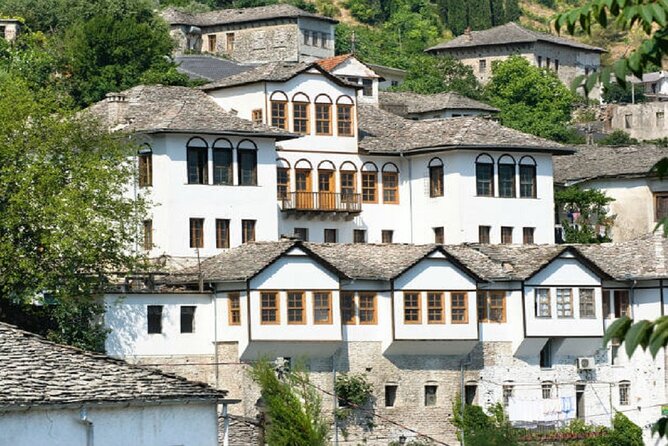
- Cfake includes protected historic buildings: The walk passes first-category monument houses and a Bektashi tekke.
- Ali Pasha Bridge is the final destination: The route connects Gjirokaster’s town streets with the surrounding hills and countryside.
- A local guide is central to the experience: Besi is one named guide associated with the tour, and his style is warm, flexible, and strongly focused on local history.
- The tour is small by design: A maximum of 15 people makes it easier to hear explanations and ask questions.
Leaving Çerçiz Topulli Square behind
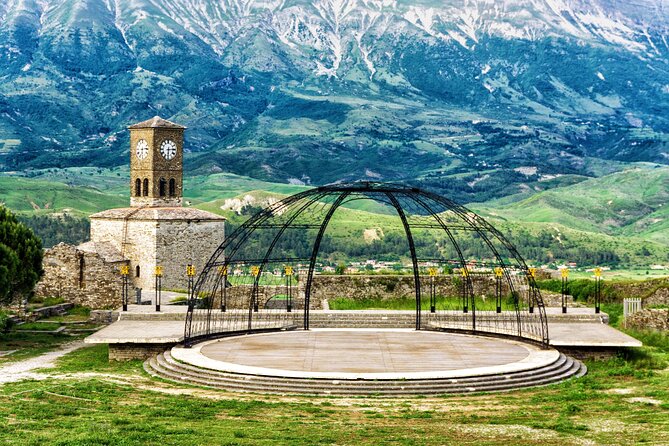
The tour begins at Çerçiz Topulli Square, the natural meeting point in Gjirokaster’s old town. You start in the center, then move away from the most familiar visitor route and toward the neighborhoods beneath the castle walls.
That change is the point of the walk. Gjirokaster is often reduced to its fortress and steep stone streets, but the town’s character also lives in the districts around the castle. From the start, you are not simply checking off monuments. You are following the shape of the old city and seeing how its neighborhoods connect.
The meeting point is easy to identify as Çerçiz Topulli Square, listed locally as Sheshi Çerçiz Topulli. The activity ends back at the same meeting point, which keeps the logistics simple. You do not need to arrange a separate ride from the final stop.
Because the duration is about three hours, I would set aside a solid half-day around the walk. The tour is long enough to give the route meaning, but short enough to fit alongside other time in Gjirokaster.
Other guided walks in Gjirokaster:
- Walking Tour Baazar – The Argjiro Castle – Zekate house
★ 4.5 · 18 reviews - Walking Tour “The Old Bazaar, Cfake, Dunavat, Ali Pasha Bridge”
★ 5.0 · 10 reviews - Gjirokastra Private Half-Day Walking Tour
★ 5.0 · 3 reviews
The Old Bazaar beneath the castle walls
The first major section leads toward Gjirokaster’s Old Bazaar. The name can set the wrong expectation. This is no longer a working bazaar in the usual sense, with rows of market stalls and constant commercial activity. Instead, it is an old neighborhood beneath the castle walls.
That distinction makes the guide especially useful. Without local explanation, you might see a pretty stone lane and a few old buildings, then move on. With context, the cobbles and houses become part of the town’s wider story.
The neighborhood is described as one of the first areas outside the castle walls. Its position matters. You are seeing the town spread below the fortress, where residential streets and old homes developed alongside the stronghold.
The cobblestone lanes are one of the visual pleasures here. They give the walk a slower pace and a strong sense of age. The old houses are another highlight, especially for anyone interested in traditional architecture rather than only major public monuments.
A short listed stop at the Bazaar is marked as about 15 minutes, but the whole route continues well beyond it. Think of this as the opening chapter, not the main destination. The appeal comes from walking through the quarter and listening to the guide explain what you are seeing.
Across the Zerzebili Bridge into Cfake
After the Old Bazaar, the route crosses the Zerzebili Bridge and reaches Cfake, another ancient neighborhood in Gjirokaster. This transition gives the walk a useful rhythm. You begin in the center, pass below the castle, then cross into a district with a different feel.
Cfake is important for its old houses. Some are classed as first-category monuments, which signals a high level of historic protection. The information provided does not assign individual names to these houses, so you should not expect a formal museum visit or a detailed interior tour. The value lies in seeing the buildings in their neighborhood setting.
This is where a good guide can make a real difference. A local guide can point out features you might pass without noticing and explain why a particular house matters. The strongest feedback about the guiding style describes someone pleasant, entertaining, flexible, and deeply interested in his own town.
Besi is specifically named in the feedback connected with the experience. He is described as a warm and cultured guide who brings together the history, culture, and character of Albania. Guide assignments can vary, so treat Besi as a useful name to know, not a guarantee that he will lead every departure.
The route’s focus on houses is a plus for repeat visitors and curious first-timers. If you have already seen Gjirokaster Castle, this neighborhood walk gives you something different. If this is your first visit, it helps you understand that the town is more than a single hilltop attraction.
A Bektashi stop in an old neighborhood
Cfake also includes a tekke belonging to the Bektashi Order. This adds a religious and cultural layer to the walk without turning the experience into a formal religious tour.
The Bektashi tradition is part of Albania’s cultural story, and a tekke gives the guide a place to discuss that tradition in relation to the town. The supplied details do not promise entry inside or a scheduled ceremony, so you should think of this as a stop to see and discuss rather than a guaranteed interior visit.
I like this part of the route because it broadens the subject matter. You are not only looking at stonework and old houses. You are also seeing how faith, neighborhood life, and local identity fit into Gjirokaster.
The setting combines older buildings with open hills and signs of rural life, including sheep on the hills above the route. That mixture is one of the walk’s strongest features. It connects the town’s built heritage with the surrounding countryside without requiring a separate excursion.
Same base, a different sort of day:
- Rafting Vjosa River Gjirokastër Albania ARG
★ 5.0 · 199 reviews - Amazing Horse Riding Experience at Vjosa National Park in Permet
★ 5.0 · 199 reviews - Rafting Tour in Vjosa Wild River National Park
★ 5.0 · 100 reviews - Amazing Rafting Experience at Last Wild Vjosa River of Europe in Permet, Albania
★ 5.0 · 60 reviews
Dunavat, hills, and the quieter side of Gjirokaster
The walk continues through Dunavat, another of Gjirokaster’s old neighborhoods. The information available presents this part of the route as a blend of old houses, nature, and hillside views rather than a series of ticketed attractions.
That is useful to understand before booking. This is a neighborhood and heritage walk, not a museum-heavy sightseeing tour. You will spend your time moving through historic areas, listening to explanations, and observing how Gjirokaster changes as you leave the center.
The sight of sheep on the hilltops gives the route a distinctly local feel. It is a small detail, but it helps explain why this walk feels different from a standard old-town circuit. You are not sealed inside a preserved visitor zone. The route keeps one foot in the old city and another in the wider area around it.
You may find the pace more rewarding if you resist the urge to hurry. The old houses, bridges, and lanes are the subject here. The guide’s comments help connect them, but you still need time to look closely.
At the same time, the available information does not give a precise difficulty rating, elevation profile, or surface breakdown. Since the route uses historic neighborhoods and cobbled streets, I would wear practical shoes and be ready for walking conditions that may not feel as smooth as a modern pavement. That is sensible preparation, not a claim about a particular section.
Finishing at Ali Pasha Bridge
Ali Pasha Bridge is the final destination and gives the walk a clear ending point. Rather than finishing at another central square, the route carries you out toward an older bridge set in a more open setting.
The bridge provides a strong contrast with the beginning of the tour. You start amid the town’s central streets and finish among hills, old structures, and rural details. That change helps you understand the relationship between Gjirokaster and the area around it.
The supplied information does not state the bridge’s exact construction date, dimensions, or access arrangements, so I would not book this expecting a long architectural lecture or a guaranteed interior visit. Its value is as the endpoint of a route through the city’s older districts.
There is also no separate transport included. The activity ends back at the original meeting point, so the return arrangement should be confirmed with the guide on the day. The key practical fact is that this is a walking outing, with the central square serving as both start and finish.
For me, the bridge works best as part of the whole sequence. On its own, it may not justify a booking for everyone. After the Old Bazaar, Zerzebili Bridge, Cfake, Dunavat, and the surrounding hills, it becomes a satisfying final stop.
What the local guide adds
The guide is the main reason to choose this walk instead of following the route alone. The old neighborhoods are easy to wander through, but their importance is not always obvious. A guide can explain why a house has monument status, identify the role of the tekke, and put each district into the larger story of Gjirokaster.
The strongest praise centers on the guide’s local connection. One guide is described as clearly fond of the town’s past, while Besi is singled out for warmth, curiosity, culture, and an ability to make the walk feel personal.
That combination matters. A dry list of dates would not add much to a walk through old lanes. The better version of this experience gives you a sense of how the town’s streets, houses, religious sites, and hills belong together.
The guide is also described as flexible. That can help if you want to ask questions or spend more time on a house, bridge, or neighborhood that catches your attention. Still, the exact guide and speaking style may vary by departure, so I would treat the guide as an important feature without expecting a specific person unless your booking confirms it.
The group limit is 15 people. That is small enough for a more personal experience than a large coach-style outing, while still allowing the tour to run as a shared walk. A minimum of two people is required, so solo bookers should keep that condition in mind.
Is $18.08 a fair price?
At $18.08 per person, this is a modestly priced three-hour guided walk. The fee covers the guide, while the route itself does not list admission charges. That makes the value easy to assess: you are paying mainly for local interpretation and route planning rather than for entry to a museum or monument.
I consider that a fair deal if you care about understanding Gjirokaster’s less obvious districts. The Old Bazaar, Cfake, Dunavat, and Ali Pasha Bridge are linked into one outing, saving you the work of figuring out how to connect them yourself.
The price is less compelling if you want a long list of included admissions, food, transport, or a full castle tour. None of those are included. The experience is about the walk and the guide’s explanations.
A mobile ticket keeps the booking simple. Confirmation is provided at booking, and the tour is near public transportation. You should still allow time to reach Çerçiz Topulli Square without rushing, since that is both the starting and ending point.
Free cancellation is available if you cancel at least 24 hours before the start time. Cancellations or changes made less than 24 hours before the experience are not refunded or accepted, and the cut-off follows local time.
Who should book this walk?
I would recommend it most strongly to you if you have already seen the main castle area or want a fuller picture of Gjirokaster. It suits people who enjoy old houses, local stories, religious heritage, and streets that feel lived in rather than arranged only for sightseeing.
It is also a good match if you prefer a small-group walk to a large organized tour. The maximum group size is 15, and the guide can provide context that is difficult to find while wandering alone.
You may want to skip it if your time in town is very short and you want only the castle and central sights. The route spends much of its time away from the standard highlights. It may also be a poor fit if you do not want a three-hour walking activity or if you need a tour with detailed accessibility information, since the available details do not provide an accessibility assessment.
The experience is likely to suit curious first-time visitors too, especially those who want a local introduction rather than a checklist of famous stops. Just remember that the emphasis is on outdoor neighborhoods and cultural context, not on entering a long series of attractions.
Should you book the Gjirokaster Old Neighborhoods Walk?
Book it if you want to see the part of Gjirokaster that sits below and beyond the castle. The route links the Old Bazaar, Zerzebili Bridge, Cfake, Dunavat, the Bektashi tekke, and Ali Pasha Bridge into one coherent outing.
The best reason to go is the guide. A strong local voice can turn old houses and cobbles into something easier to understand, and the feedback connected with this experience points to guides who are warm, flexible, and deeply interested in Gjirokaster.
Skip it if you are seeking a castle admission tour, transport, meals, or a packed list of indoor sights. For $18.08, though, this is a sensible way to add three hours of local context and quieter streets to your Gjirokaster visit.
FAQ
Where does the tour start?
The tour starts at Çerçiz Topulli Square, also written as Sheshi Çerçiz Topulli, in Gjirokaster, Albania.
Where does the tour end?
The activity ends back at the meeting point in Çerçiz Topulli Square.
How long does the tour last?
The walking tour lasts approximately three hours.
What places does the route visit?
The route includes the Old Bazaar, Cfake, Dunavat, the Zerzebili Bridge, and Ali Pasha Bridge. It also passes old houses and a tekke belonging to the Bektashi Order.
Is a guide included?
Yes. A guide is included in the tour price. Besi is one guide associated with the experience, though the guide for a particular departure should be confirmed at booking.
How much does the tour cost?
The listed price is $18.08 per person.
How many people can join?
The tour has a maximum group size of 15 people. At least two people are required for the tour to operate.
Can I cancel for a refund?
Yes. You can cancel for a full refund up to 24 hours before the experience start time. Cancellations or changes made less than 24 hours before the start time are not refunded or accepted.
Just added in Gjirokaster
- Half day Quad Adventure at Vjosa National Park in Permet★ 5.0 · 4 reviews
- Multi Day Kayaking In Vjosa River ,Camping -6 Days★ 5.0 · 5 reviews
- Walking Tour Baazar – The Argjiro Castle – Zekate house★ 4.5 · 18 reviews
- Cooking Class★ 4.5 · 12 reviews
- Wood Crafting Experience in Gjirokastra★ 4.5 · 10 reviews
- Walking Tour “The Old Bazaar, Cfake, Dunavat, Ali Pasha Bridge”★ 5.0 · 10 reviews
- Gjirokastra Private Half-Day Walking Tour★ 5.0 · 3 reviews
- Gjirokaster – The Stone City of UNESCO, Private Tour from Tirana★ 4.5 · 4 reviews
Walking Tours, compared.

Tirana Walking Tour: History, Culture &Gems by a Passionate Guide
Read our review →
Premium Walking Tour of Berat with Expert Guides
Read our review →
Private Walking Tour Visit to Durrës with Licensed Guide
Read our review →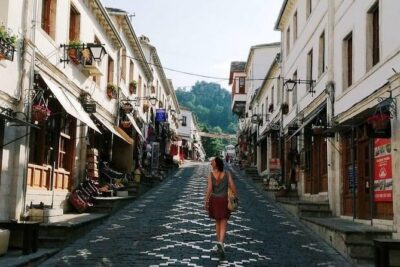
Walking Tour Baazar – The Argjiro Castle – Zekate house
Read our review →Browse the lists this tour appears in