
Reviewed · WALKING TOURS
Inside Tirana Walking Tour
Tirana’s story comes into focus as you walk from the grand center of Skanderbeg Square to the former communist district of Blloku. I like the mix of major landmarks and street culture, and I like that the route includes both the bright central plaza and the sobering Postbllok memorial. At about $6, it gives you a useful first look at the city for very little money.
The main consideration is pace. Two hours is enough for an overview, not full museum visits or long stops inside buildings. The tour is also outdoors and requires good weather, so bring sensible shoes and keep the cancellation terms in mind.
Key points at a glance
- A low-cost Tirana introduction: The price is about $6.02 per person for roughly two hours with an English-speaking guide.
- A route with sharp contrasts: You move from the Palace of Culture and Skanderbeg Square to communist-era memorials and fashionable Blloku.
- A guide-led walk: Guide Era has been specifically praised for explaining Albanian and Tirana history clearly, while also pointing out murals and street life.
- No admission fees are listed: The experience focuses on outdoor sightseeing, with free entry noted at the scheduled stops.
- A central start and finish: Meet at Et’hem Bej Mosque in Skanderbeg Square, and return there at the end.
- A small-group possibility: The maximum group size is 30, though the actual group may be smaller.
Why this two-hour walk works well in Tirana
I see this tour as a city orientation rather than a full historical course. It links the places you are most likely to visit in central Tirana and gives you a simple timeline: national identity, Ottoman and Italian-era city planning, communist rule, and the open, social city that followed.
The route also avoids a common problem with short city walks. It is not just a parade of statues and government buildings. You get the National Theatre of Opera and Ballet, the monumental center around Skanderbeg Square, a national museum, a former communist restricted district, and the café-and-bar quarter of Blloku.
The English-language format keeps the experience easy to join for international visitors. The tour is mobile-ticketed, starts beside one of Tirana’s best-known landmarks, and ends at the same meeting point. That makes it simple to fit into a first day in the city.
One past booking with guide Era was especially personal, with only one participant. You should not assume every departure will be private, since the maximum group is 30, but this detail shows that the group size can sometimes be much smaller than the limit. A smaller group usually makes it easier to ask questions and pause for photographs.
Other guided walks in Tirana:
- Walking Tour of Tirana
★ 5.0 · 646 reviews - Local food experience & walking tour of Tirana
★ 5.0 · 192 reviews - Tour a Piedi di Tirana
★ 5.0 · 174 reviews
Starting at Et’hem Bej Mosque and the Opera House
The meeting point is Et’hem Bej Mosque, at Sheshi Skënderbej 1. From here, the walk begins beside the Palace of Culture, the large complex that houses Albania’s National Theatre of Opera and Ballet.
The opera institution has roots in the Albanian Philharmonic, founded in 1950. That early organization included a choir, symphony orchestra, opera singers, ballet performers, and a conductor. In 1966, the National Theatre of Opera and Ballet moved into the Palace of Culture, where it continues its work.
This is useful context because the building is more than a stop for a photograph. It represents the effort to create a national cultural institution during Albania’s modern development. The country established its first vocational conservatory as demand grew for trained musicians and performers.
You will spend about 15 minutes here, with no admission fee listed. That is enough to understand the building’s role and take in its position beside the square. It is not enough for a performance or a full look at the theatre’s program, so I would treat this as an exterior introduction.
If opera and ballet are important to you, ask the guide what is currently showing. The walking tour itself does not include a performance or ticket. That distinction matters, since the theatre is part of the route but not a separate cultural event.
Skanderbeg Square, Tirana’s civic center
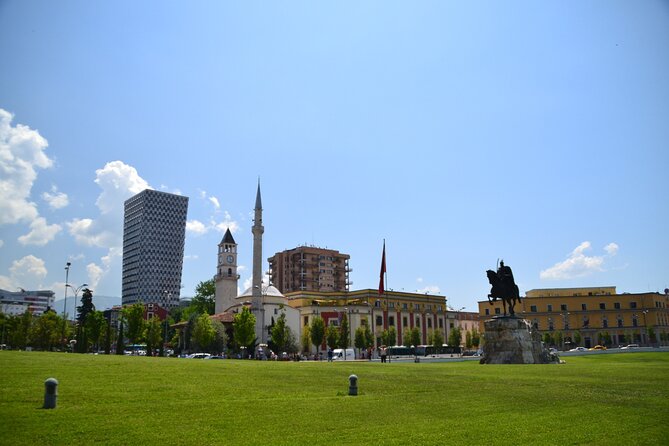
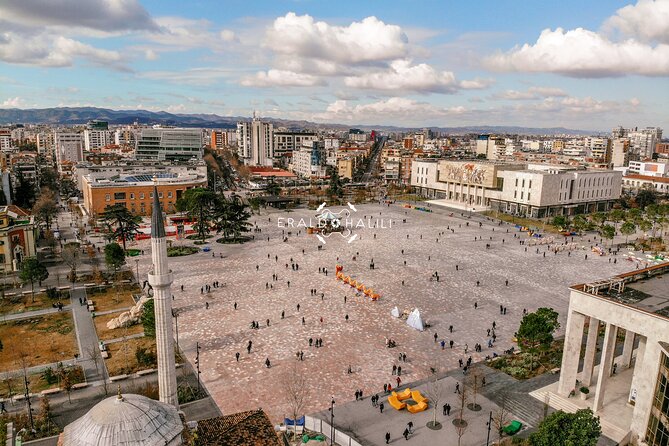
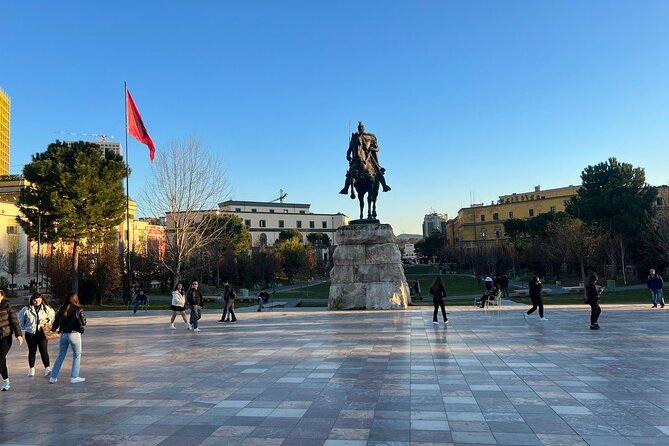
From the Opera House, the route moves into Skanderbeg Square. At roughly 40,000 square meters, this is the main plaza in the city center. Its name honors Gjergj Kastrioti Skënderbeu, Albania’s national hero, whose monument dominates the square.
This is the place where Tirana’s major stories meet. Around the plaza you can see the Tirana International Hotel, Palace of Culture, National Opera, National Library, National Bank, Et’hem Bej Mosque, Clock Tower, City Hall, several ministry buildings, and the National History Museum.
I like this part of the walk because the square works as a quick lesson in urban planning. Armando Brasini prepared an early city plan in 1925, followed by Florestano Di Fausto in a Neo-Renaissance style. Gherardo Bosio later updated the master plan in 1939, after the Italian invasion of Albania.
You do not need to remember every architect’s name to benefit from the stop. Look around and notice how one large public space gathers religious, cultural, political, and commercial buildings. The square also gives you a clear sense of Tirana’s scale before the route turns toward quieter streets and smaller memorials.
The scheduled time is about 15 minutes. That is brief for such a large area, especially if you want photographs of every building. Still, a guide can help you avoid wandering without context and point out the landmarks that matter most.
The National History Museum and its wide historical sweep
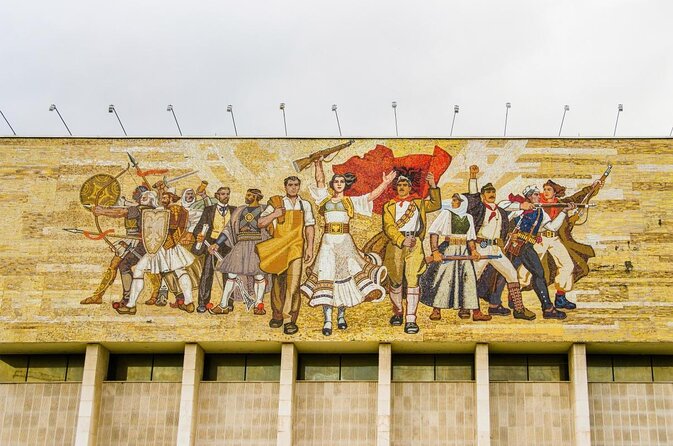
The National History Museum is one of the route’s most important buildings. It opened on October 28, 1981, and covers 27,000 square meters, with 18,000 square meters available for exhibitions.
The large mosaic above the entrance is called The Albanians. It presents figures from ancient times through the modern period, offering a bold visual statement before you even enter the building. The museum’s sections cover antiquity, the Middle Ages, the Renaissance, independence, iconography, the National Liberation Antifascist War, communist terror, and Mother Teresa.
The tour allocates about 15 minutes here and lists admission as free. That timing means you should not expect a detailed museum visit. The guide can explain why the museum matters and help you decide if you want to return later for a longer look.
I find that especially useful in Tirana, where the country’s past can feel compressed into monuments, murals, and public buildings. The museum gives a national frame to the rest of the walk. After seeing it, the route’s later focus on dictatorship and political change has more meaning.
If you want to enter and study the exhibits, plan separate time outside the tour. The walk’s value here is orientation, not a complete museum visit. Check the practical details locally before planning around extended opening hours, since no longer museum visit is included in the experience.
Same base, a different sort of day:
- Hike Gamti Mountain with Bovilla lake view & canyon- From Tirana
★ 5.0 · 1,280 reviews - Berat city UNESCO tour, the Castle & Belshi lake- From Tirana
★ 5.0 · 804 reviews - Kruja castle, the old Bazaar & Sarisalltik- Departure from Tirana
★ 5.0 · 592 reviews - Albanian Night Show: Traditional Music, Dance & Dinner in Tirana
★ 5.0 · 431 reviews
Postbllok, where Albania’s communist past feels close
Postbllok, also called Checkpoint Monument, changes the mood of the walk. The memorial recalls the surveillance, punishment, and persecution associated with Enver Hoxha’s communist regime.
The installation includes original concrete pillars from a notorious labor camp, an old bunker, and part of the Berlin Wall. These objects make the site direct and physical. Instead of hearing only dates and political terms, you see pieces connected to imprisonment, control, and division.
The stop lasts about 10 minutes and has no admission fee listed. That is enough time for the guide to explain the memorial and for you to consider the contrast between the open city around it and the restricted society it recalls.
I appreciate the inclusion of Postbllok because it prevents the walk from becoming a cheerful tour of central Tirana alone. Albania’s communist period shaped daily life, movement, work, and public speech. A short stop cannot cover all of that, but it acknowledges a part of the country’s past that should not be skipped.
The memorial may also be the most emotionally serious part of the route. If you prefer a tour focused only on architecture, cafés, and photographs, this section may feel heavier. For most people, that is also why it is worth including.
Blloku, from forbidden quarter to social center
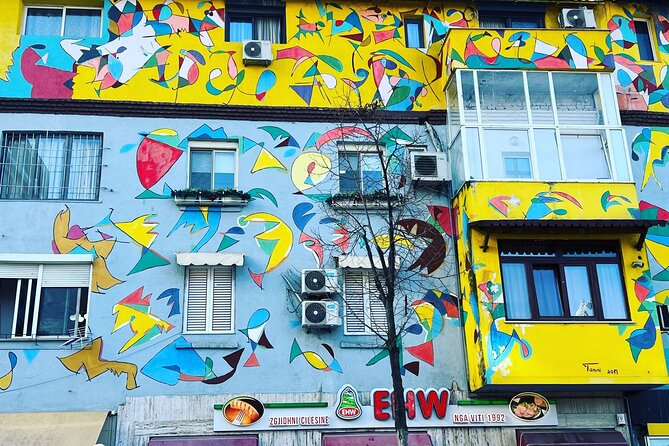
The final major stop is Blloku, formally Ish-Blloku. Today it is an upmarket district with boutiques, shops, restaurants, bars, pubs, and cafés. It is often described as a playground for Albania’s young elite, and its polished apartments and new development show how quickly Tirana has changed since the fall of communism.
The district’s earlier role gives it much more weight than a simple nightlife stop. During the communist period, Blloku was a restricted residential area for members of the Albanian politburo. Ordinary Albanians were not allowed to enter, and the area was left off many maps. The former residence of Enver Hoxha can still be found here.
That change, from a closed political quarter to an entertainment district, is one of the strongest ideas in the tour. You can see how the city’s public life has shifted from secrecy and control to restaurants, cafés, shopping, and evening social life.
The scheduled visit is about 15 minutes. You get a quick look rather than time to eat or settle into a café. I would use the guide’s introduction as a scouting visit, then return to Blloku later if you want dinner or a drink.
The district’s popularity also means that the experience here is less about preserved architecture and more about present-day Tirana. New flats and apartments have grown rapidly in the area. If you want only old buildings, Blloku may seem less rewarding. If you want to understand how the capital lives now, it is an important finish.
How the guide shapes the experience
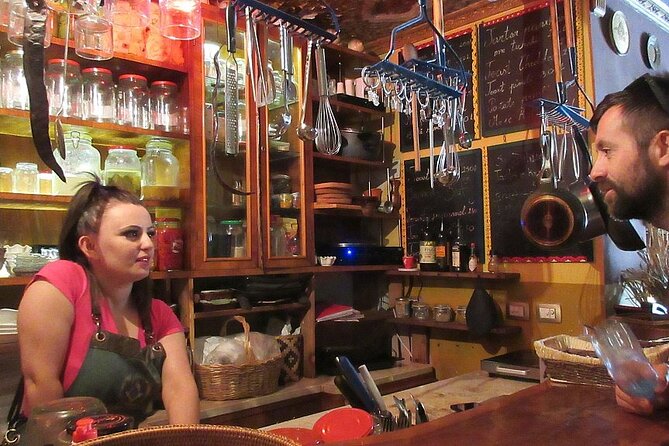
A two-hour city walk depends heavily on the guide. The route itself is compact, but the value comes from linking each place to the next. Era, one named guide connected with the experience, has been described as friendly, well informed, and clear when explaining Albania and Tirana.
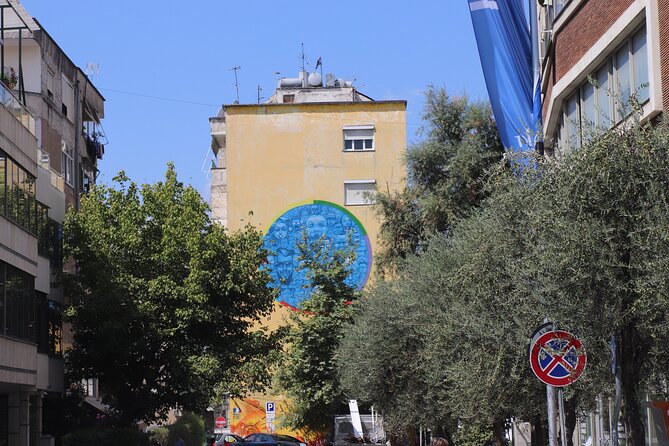
What I find especially useful is the reported difference between this walk and another standard city tour. Era’s approach included street culture and murals, not only the major monuments. That suggests you should watch the spaces between the formal stops. Tirana’s identity is not confined to museums and ministries.
A guide can also keep the pace sensible. Each scheduled stop lasts between 10 and 15 minutes, so you will move regularly rather than linger in one place. The route suits you if you prefer a broad introduction and plan to explore selected sites on your own afterward.
The maximum group size is 30. That is manageable for a central walking route, but it may feel less personal than a private walk. Since the experience can sometimes have very few participants, the actual atmosphere may vary by departure.
Is $6.02 good value?
At about $6.02 per person, the price is unusually low for a guided two-hour introduction. You are paying mainly for the guide’s time, route planning, and explanations. No separate attractions or food are included, but the scheduled stops are listed with free admission.
I consider it good value if you are arriving in Tirana and want to get your bearings fast. The route covers enough ground to help you decide where to return. You can revisit the National History Museum, spend more time in Blloku, or explore the buildings around Skanderbeg Square after the walk.
The low price also makes the tour easy to pair with a more detailed museum visit or another paid activity. I would not book it expecting a full guided tour of the museum, an opera performance, or an extensive treatment of every period in Albanian history.
Tips are not included. They are optional and separate from the listed cost. Everything not specifically included is also your own expense.
Timing, weather, and who should book
The experience lasts about two hours and is offered in English. It begins and ends at Et’hem Bej Mosque, making it convenient if you are already in central Tirana. The route is near public transportation, and most people can participate.
Because this is an outdoor walking experience, good weather is required. Wear shoes suited to two hours on city streets, and bring protection from sun or rain based on the forecast. The experience may be moved or refunded if poor weather prevents it from operating.
You can cancel for a full refund if you do so at least 24 hours before the start time. Changes made within 24 hours are not accepted, and late cancellations are not refunded. Confirmation is sent within 48 hours of booking, subject to availability.
Service animals are allowed. The tour also has a minimum number of participants, so it can be canceled if that minimum is not reached. In that case, you are offered another date or experience, or a full refund.
I would recommend this walk to first-time visitors, budget-minded sightseers, solo visitors, and anyone who wants a short introduction before exploring Tirana independently. It is also a good fit if you care about modern political history as much as major landmarks.
I would choose something else if you want long indoor visits, a private guide guaranteed for your party, or a slow food-and-café walk. The route is brisk, the group size can reach 30, and the main sites are viewed within a short schedule.
Should you book the Inside Tirana Walking Tour?
Book it if you want a cheap, compact overview that connects Tirana’s national symbols, communist past, and modern social life. The strongest parts are the contrast between Skanderbeg Square, Postbllok, and Blloku, plus the chance of a personal guiding style from someone such as Era.
Go in with the right expectations. This is not a full museum tour or a deep architectural study. It is a useful first walk, especially on your first day, and the $6 price leaves you plenty of room in your budget for returning to the places that catch your interest.
FAQ
Where does the Inside Tirana Walking Tour start?
The tour starts at Et’hem Bej Mosque, Sheshi Skënderbej 1, Tiranë 1001, Albania.
Where does the tour finish?
The activity ends back at the meeting point near Et’hem Bej Mosque.
How long does the tour last?
The walking tour lasts approximately two hours.
What language is the tour offered in?
The tour is offered in English.
How much does the tour cost?
The listed price is about $6.02 per person.
What locations are included?
The route includes the National Theatre of Opera and Ballet of Albania, Skanderbeg Statue and Square, the National History Museum, Postbllok Checkpoint Monument, and Blloku.
Are entrance fees included?
The scheduled stops list admission as free. The tour does not include anything beyond the guide unless specifically mentioned.
What is the maximum group size?
The activity allows a maximum of 30 participants.
Is the tour suitable for most people?
Most people can participate, and the experience is near public transportation. Service animals are allowed.
Can I cancel for a full refund?
Yes. You can cancel at least 24 hours before the experience start time for a full refund. Cancellations or changes made less than 24 hours before the start are not refunded or accepted.
Just added in Tirana
- Wine Tasting day in Berat (Visit to the Berat Castle & Lunch included)★ 4.5 · 6 reviews
- From Tirana Wine Tasting & Food tour in Berat★ 5.0 · 5 reviews
- Berat Cooking Class- Traditional Albanian Cooking Class★ 5.0 · 9 reviews
- UNESCO heritage in Albania – 4 days★ 5.0 · 3 reviews
- Wine Tasting & Vineyards Escape near Tirana★ 5.0 · 18 reviews
- Shen Gjergji Waterfall & Tirana Sunset Included Dinner★ 5.0 · 9 reviews
- Visit Vlore & Himare Beaches includes lunch★ 4.5 · 13 reviews
- 2-Day Private Ohrid Tour in Skopje, Prishtine Trip and Prizren★ 5.0 · 8 reviews
Walking Tours, compared.

Tirana Walking Tour: History, Culture &Gems by a Passionate Guide
Read our review →
Premium Walking Tour of Berat with Expert Guides
Read our review →
Private Walking Tour Visit to Durrës with Licensed Guide
Read our review →
Walking Tour Baazar – The Argjiro Castle – Zekate house
Read our review →
Browse the lists this tour appears in