
Reviewed · UNESCO HERITAGE TOURS
Small Group Tour; Pearls of Albania in 8 Days (3 UNESCO Sites)
Albania packs an astonishing range of sights into eight days: Ottoman hill towns, Roman ruins, mountain roads, cold blue springs, and beaches along the Ionian coast. This small-group tour gives you a practical way to connect the dots, with private transport, a tour leader, and hotel pickup in Tirana.
I like the small maximum of 10 people, which should make long drives and guided walks easier to manage. I also like the mix of famous sights and less polished places, from Berat’s castle homes to Theth’s old church, the Blue Eye, and the seaside villages of the Riviera.
The main consideration is the pace. You cover much of Albania, so several stops last only about an hour. Add in mountain roads, beach traffic, and a non-refundable booking policy, and this suits an active sightseeing trip more than a relaxed beach holiday.
Key points to know before booking
- Three UNESCO sites in one trip: Explore Berat, Gjirokaster, and Butrint, each offering a different window into Albania’s past.
- A maximum of 10 people: Small-group travel gives you more personal attention than a large coach tour.
- Private transport throughout: You avoid arranging buses, taxis, and intercity connections between remote places.
- Seven breakfasts included: Accommodation, breakfast, fuel, road taxes, tourist taxes, and entry tickets are covered.
- Mountain and coastal Albania together: Theth and Qafa e Thores bring high mountain views, while Ksamil, Himare, Dhermi, and Vlore bring sea air and beaches.
- A full final day in Tirana: The tour ends with Skanderbeg Square, Bunk’Art 2, Tirana Castle, and Blloku.
Why this route gives you a useful first look at Albania
This is not a single-region tour. It is a broad sweep from northern Albania to the southern coast, then back through Vlore, Durres, and Tirana. You see medieval towns, Ottoman buildings, Communist-era sites, archaeological ruins, and seaside resorts in one run.
That variety is the tour’s great strength. Albania can feel different from one valley to the next, and the route makes that clear. The drawback is that you trade slow exploration for coverage. You will often get a guided walk and some free time, but not a full day in each place.
The private vehicle matters here. Several destinations are not simple additions to a standard public transport trip, especially Theth, the Blue Eye, and Butrint. Having one tour leader and one vehicle also keeps the trip simple when roads, weather, or site schedules affect the day.
The group limit is 10 people. That is small enough for questions and conversation without requiring the expense of a fully private tour. If your guide is Eduart, the supplied information identifies him as a guide who made a particularly strong impression through his explanations and care during the journey.
Other longer trips starting in Tirana:
- Private 4 Day Tour of Albania from North to the South
★ 5.0 · 36 reviews - Discover the Best of Albania: 7 Days of Highlights & Hidden Gems
★ 5.0 · 25 reviews - Small Group Tour; Gems of Albania, Kosovo & N. Macedonia
★ 5.0 · 23 reviews
Day 1: Shkoder and the views from Rozafa Castle
Your first morning begins with pickup in Tirana, generally around 9:00 a.m. The route heads north to Shkoder, one of Albania’s oldest cities and the gateway to the country’s northern mountains.
Shkoder has long been a meeting point for different cultures. Its architecture reflects Venetian influence, and the city has a long trading history because of its position near Lake Shkoder and the routes into the Balkans. If you visit in February, you might encounter the city’s carnival, known for handmade masks produced locally.
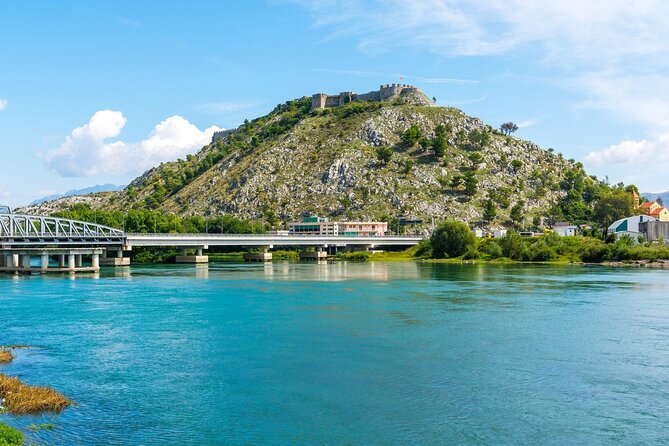
The key sight is Rozafa Castle, where the reward is as much the view as the ruins. From the hill, you can look toward Lake Shkoder and the meeting point of three rivers before they reach the Adriatic Sea. The castle has ancient roots, and the setting helps explain why this area mattered to Illyrian and later Roman powers.
The day includes time in Shkoder and an overnight stay there. The first day is not overloaded, which gives you a reasonable start after leaving Tirana. Still, the castle requires walking on uneven historic ground, so practical shoes are a good idea.
Day 2: Theth, Qafa e Thores, and northern mountain life
Day two takes you toward Theth National Park. The scenery changes quickly as paved urban roads give way to rural country, open fields, rivers, Lake Shkoder, and rugged mountain slopes.
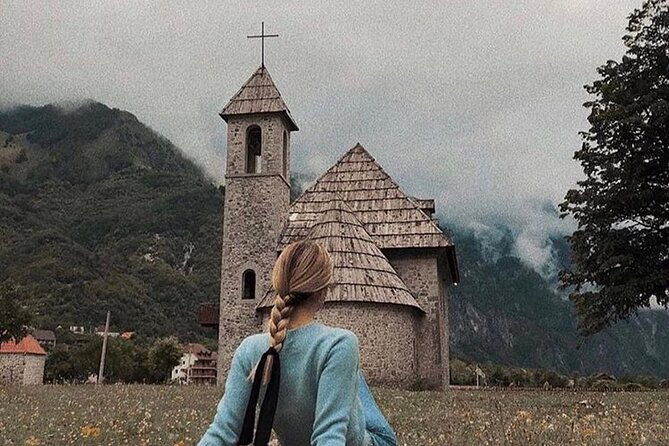
The route climbs toward Qafa e Thores, at about 1,700 meters above sea level. This is one of the trip’s strongest viewpoints, with broad views of the Albanian Alps. The road and mountain setting are part of the experience, but they also mean this can be a demanding day for anyone who dislikes winding or steep drives.
Theth is known for medicinal herbs, and travel in May or June may bring fields of lavender. That detail makes the timing of your trip matter. You will not get the same seasonal color in every month, and the tour does not promise lavender, but the mountain setting remains the main attraction.
In Theth, you visit the old church and the Lock-in Tower. The tower is tied to the area’s traditional blood-feud customs and offers a glimpse into the social rules that shaped life in isolated mountain communities. You return to Shkoder for the night rather than staying in Theth.
This arrangement keeps the hotel base simple, but it also means a long out-and-back day. I would see this as a worthwhile trade if you want a taste of the Albanian Alps without arranging a separate mountain trip.
Day 3: Berat’s white windows and castle quarter
After breakfast, the route turns south to Berat, one of Albania’s most attractive historic towns and one of the tour’s three UNESCO sites.
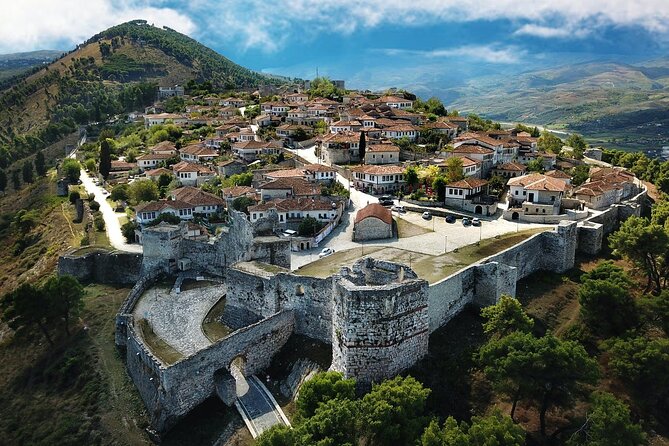
Berat is famous for its stacked Ottoman houses, whose many windows face across the hillsides. The nickname town of 1,001 windows makes sense when you look across the river toward the old quarters. Narrow stone streets lead through the historic areas, and the town still feels lived in rather than preserved only for visitors.
Berat Castle is especially interesting because people still live within its walls. The site contains churches, mosques, old homes, and views over the town. You are not simply walking through a dead monument. You are seeing a historic neighborhood that continues to function.
The National Iconographic Museum Onufri adds a different layer. It presents religious art linked to Onufri, the celebrated painter known for a distinctive red color. The collection gives context to the churches and religious buildings you see elsewhere in Albania and the Balkans.
The stop at Gorica Bridge and the Gorica neighborhood rounds out the visit. Allow yourself time to look back toward Berat’s hillside houses and the castle. The scheduled stops are fairly short, so the tour gives you a strong introduction rather than a slow, museum-heavy day.
Other heritage days out of Tirana:
- Berat city UNESCO tour, the Castle & Belshi lake- From Tirana
★ 5.0 · 804 reviews - From Tirana: Berat UNESCO & Belshi Lake Full-Day Tour
★ 5.0 · 118 reviews - Gjirokastra UNESCO & Ksamil Beach – From Tirana/Durres/Golem
★ 5.0 · 117 reviews - Berat UNESCO Small-Group Day Tour from Tirana
★ 5.0 · 31 reviews
Day 4: Gjirokaster’s stone streets and old houses
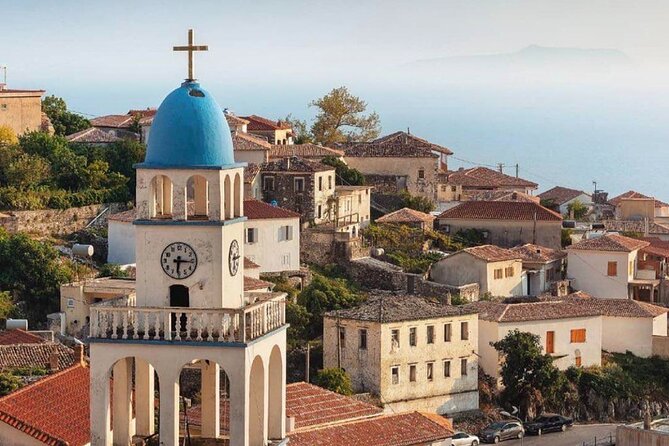
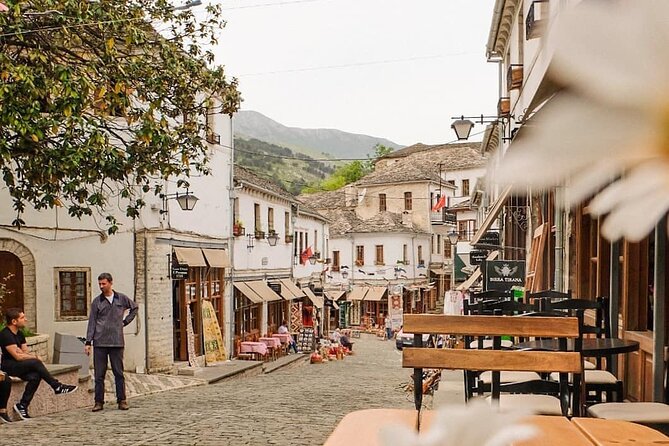
Gjirokaster is another UNESCO site, and it feels different from Berat. Known as the Stone City, it rises along the eastern side of Mali i Gjere, with steep streets and houses built in a fortress-like style.
The Gjirokaster Castle is the center of the visit. Its long history reaches back to the fourth century AD, and the complex offers wide views over the surrounding valley. The site is large enough to reward a careful walk, though the stone surfaces and slopes can make the visit tiring.
Before reaching the castle, you pass through the old bazaar. This is a good place to see local crafts and handmade goods, though you should keep purchases in perspective because souvenirs are not included in the tour price.
Skenduli House is one of the most useful stops for understanding daily life in old Gjirokaster. The house is preserved with its original features, giving you a closer look at how a wealthy traditional home was arranged. It is more personal than a castle visit and helps turn the town’s architecture into something you can understand.
Gjirokaster also hosts a major folklore festival every five years, when traditional music, dance, and costumes fill the city. The timing of your tour may not coincide with that event, but the town’s connection to Albanian folk culture remains clear.
Day 5: The Blue Eye, Ksamil, and ancient Butrint
Day five combines one of Albania’s most unusual natural sights with its best-known archaeological park.
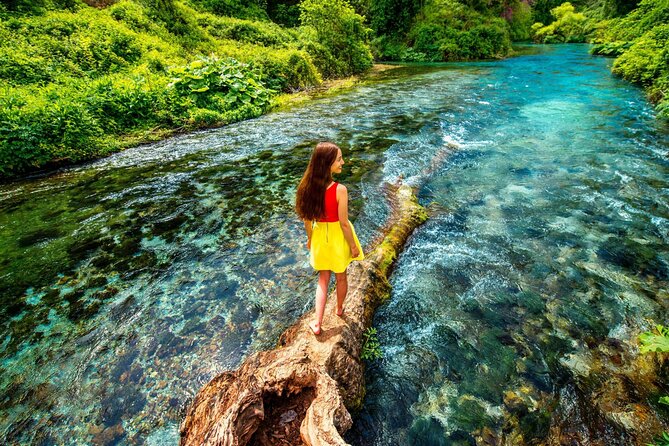
The Blue Eye is a cold freshwater spring surrounded by trees. The water temperature stays below 10 degrees Celsius, and its depth has not been fully established. You get around 30 minutes there, enough to see the clear blue center and the surrounding woodland, but not enough for an extended walk.
Next comes Ksamil, the beach resort often called the pearl of the Albanian Riviera. White sand, clear water, and views toward four islands give it a tropical feel. The stop is short and does not include beach facilities, meals, or private time on an island, so think of it as a scenic coastal pause rather than a full beach day.
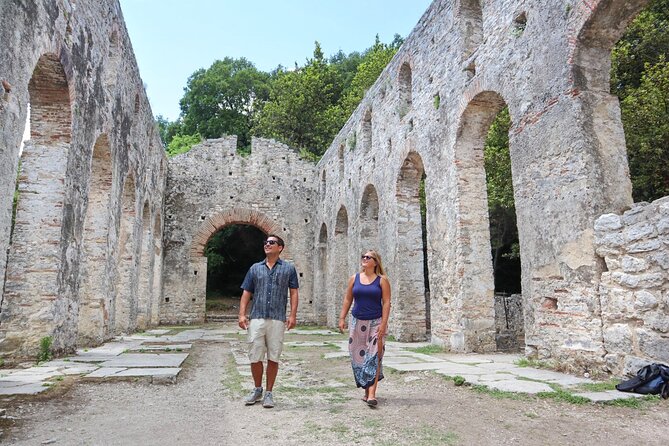
The main historical stop is Butrint National Park, Albania’s third UNESCO site on this route. Ancient ruins sit within a natural setting, and the combination is what makes the place memorable. The archaeological remains are the focus, but the trees and water around them keep the visit from feeling like a bare stone site.
An hour at Butrint is enough for an introduction, not a complete archaeological study. If ancient sites are your top interest, you may wish the schedule allowed longer. If you prefer variety, the combination of spring, beach, and ruins makes this one of the most satisfying days.
Day 6: Himare, Dhermi, and the Albanian Riviera
The route follows the coast through beaches and villages including Llamani, Dhermi, and Palasa. This is one of the most scenic driving days, with small settlements, stone walls, vines, fig trees, and mountain slopes meeting the sea.
Himare offers time for a seaside walk, fresh juice, local food, and handmade souvenirs. Its position between green mountain peaks and clear coastal water gives it a relaxed feel, although the one-hour stop limits how much you can do.
Dhermi is known for coves, pebbled beaches, and clear water. You have free time to enjoy the coast, but this is not structured as a full swimming holiday. The tour spends the night near Vlore, keeping the next day’s return toward Tirana manageable.
This day will appeal to you if you want to see the Riviera without renting a car. It may disappoint you if your main goal is long beach time, since the schedule keeps moving.
Day 7: Vlore’s independence story and Durres by the sea
The day starts with Vlore’s Lungomare promenade. From the waterfront, you can look toward Sazani Island and the Karaburun Peninsula while taking a walk or having coffee.
Vlore matters not only for its climate and beaches but also for Albanian national history. Independence was declared here on November 28, 1912. The visit to Flag’s Square and the Independence Monument gives the seaside city a stronger historical focus.
The Muradie Mosque is a particularly worthwhile stop. Built in 1537, this Ottoman building is one of Vlore’s national monuments and has survived for nearly five centuries. The tour includes entry to the mosque, while modest behavior and appropriate clothing are sensible at any religious site.
In Durres, you pass the amphitheater, Roman ruins, and Venetian Tower before reaching the Vollga seaside promenade. The schedule presents the city as a short stop rather than a full archaeological visit. You can have coffee by the water and try the local ice cream before continuing to Tirana.
Day 8: Tirana, Bunk’Art 2, and Blloku
The final day focuses on Tirana. The capital brings together Ottoman, Italian, and Communist-era influences, often within a short walk of one another.
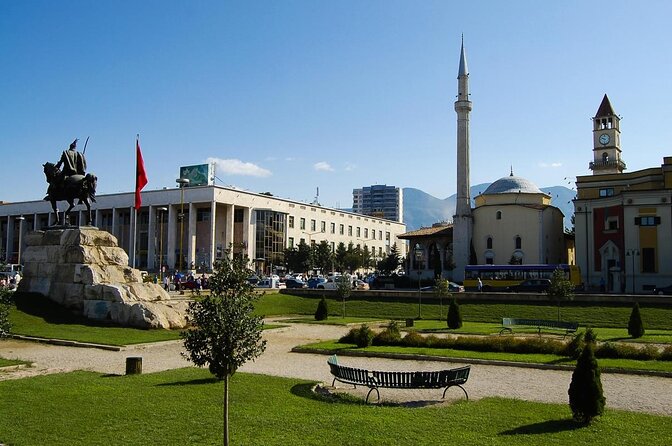
Skanderbeg Square is the natural starting point. Around it are the National Museum, Opera House, Bank of Albania, Skanderbeg Statue, Ethem Beu Mosque, and cafes. The stop is brief, so you will get an overview rather than time for every museum.
Bunk’Art 2 is the day’s strongest historical visit. The museum occupies a former nuclear bunker built for Communist leader Enver Hoxha and his inner circle. Opened to the public in 2016, it uses video displays and preserved bunker spaces to explain the Communist army and everyday life under the regime.
The route then continues along Rruga Murat Toptani and Tirana Castle, now a pedestrian area where old forms and newer shops meet. The final stop is Blloku, once associated with the Communist leadership and now known for food, cafes, and nightlife. It is a fitting end because it shows how quickly Tirana has changed.
What the price includes, and where extra costs appear
The price is $2,278.09 per person. That is a serious sum, but it covers the parts of Albania that are hardest to arrange independently: private transportation, a professional tour leader, hotel pickup and drop-off in Tirana, accommodation with breakfast, entry tickets for the scheduled sites, fuel, tourist taxes, and road taxes.
You receive seven breakfasts. Lunches, dinners, drinks, snacks, souvenirs, and personal spending are not included, so budget separately for food each day. The price is based on double, twin, triple, or quadruple occupancy in three-star accommodation.
Single-room occupancy costs an additional 45 euros per night. The supplied information also notes that accommodations can be intimate, clean, and tied to local history or folklore, but the exact hotels are not specified. If a particular hotel standard matters to you, ask before paying.
A group of up to 10 helps justify the cost, especially for a route with mountain roads and scattered sights. The value is weaker for someone who wants to stay in one town or spend most days at the beach.
Who should book this Albania tour?
I would choose this tour if you want a first look at Albania and prefer not to manage transport between distant regions. It suits you especially well if you enjoy historic towns, guided sightseeing, scenic drives, and a changing schedule.
It is less suitable if you want long hikes, extended museum visits, or several unplanned afternoons. The route is active, and the short stops mean you should be ready to leave each place after getting a solid introduction.
The tour is capped at 10 people and most people can participate, but you should still be comfortable with walking through old stone streets, climbing castle areas, and spending time on mountain roads. Bring practical shoes, and remember that weather, strikes, holidays, closures, or other outside events can alter the schedule.
The experience is non-refundable and cannot be changed after booking. Travel insurance is your responsibility. Tips are not required in Albania, but a tip for good service is customary as an international practice.
FAQ
How long is the tour?
The tour lasts approximately eight days and ends back at the meeting point in Tirana.
Where does the tour begin?
The stated meeting point is Choose Balkans, Albania Tour Operator, on the third floor of Tower 2 at the Twin Towers, Bulevardi Deshmorët e Kombit, Tirana.
What time does the tour start?
The listed start time is 9:00 a.m. Hotel pickup in Tirana is offered in the morning.
What is the maximum group size?
The tour has a maximum of 10 participants.
Are hotels included?
Yes. Bed-and-breakfast accommodation is included for all overnight stays.
How many breakfasts are included?
Seven breakfasts are included.
Are admission tickets included?
Yes. Entry tickets for the sites scheduled for visits are included.
Are meals other than breakfast included?
No. Lunches, dinners, drinks, snacks, souvenirs, and personal spending are not included.
Can I book a single room?
Yes. Single-room occupancy is available for an additional 45 euros per night per person in three-star accommodation.
Should you book it?
Book this tour if you want Albania’s major historic towns, northern mountains, southern beaches, and capital city in one organized trip. The strongest reasons are the small group, private vehicle, three UNESCO sites, and the hard-to-arrange stops at Theth, the Blue Eye, and Butrint.
Skip it if you want a slow holiday or need a flexible cancellation policy. For an energetic first visit, though, this route gives you a useful and varied introduction to Albania without asking you to solve the country’s long-distance transport puzzle yourself.
Just added in Tirana
- Small Group Tour of Montenegro, Albania, Kosovo & N. Macedonia★ 4.5 · 14 reviews
- Full-Day Tour of Albania’s Bunkers and Beaches, from Tirana★ 5.0 · 16 reviews
- Communist History Tour Tirana & Street Food★ 5.0 · 15 reviews
- The truest face of Communism★ 5.0 · 18 reviews
- Tandem Paragliding Dajti Tirane Albania★ 4.5 · 7 reviews
- Tirana City Tour with Hotel Pickup★ 4.5 · 16 reviews
- Private Transfer Tirana Airport to cities in Albania &the Balkans★ 5.0 · 12 reviews
- Peaks of the Balkans Tour: Theth, Valbona & Koman Lake in 5 days★ 5.0 · 11 reviews
UNESCO Heritage Tours, compared.
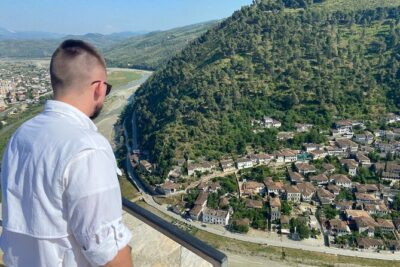
Berat city UNESCO tour, the Castle & Belshi lake- From Tirana
Read our review →
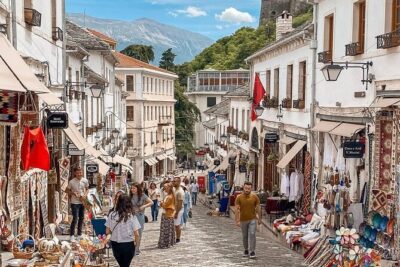
Gjirokastra UNESCO & Ksamil Beach – From Tirana/Durres/Golem
Read our review →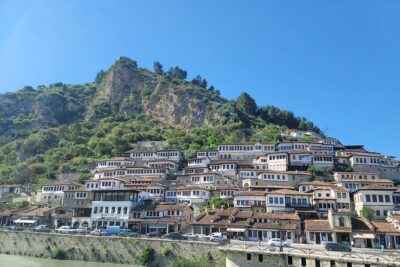
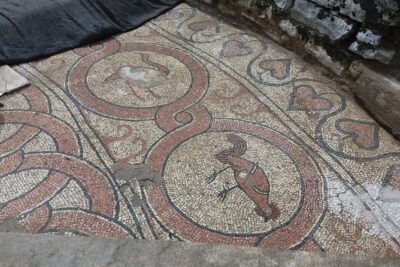
Ancient City of Butrint, UNESCO World Heritage site – A Must
Read our review →
Berat Day Tour: Explore Albania’s UNESCO City from Durres
Read our review →Browse the lists this tour appears in