
Reviewed · COMMUNIST HISTORY TOURS
Private Cold War City Tour in Gjirokaster
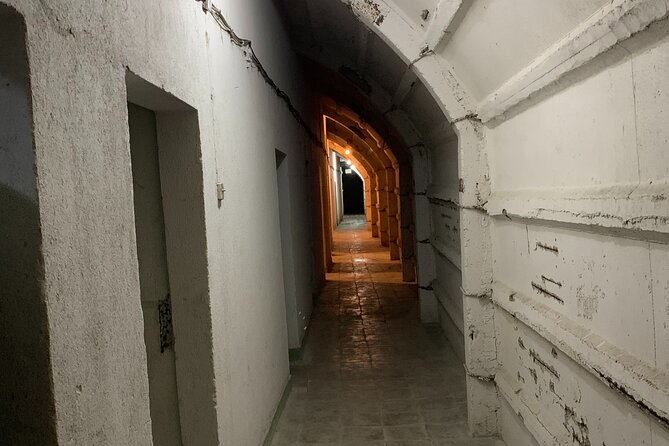
Gjirokaster’s most revealing sights are not all up on its famous stone rooftops. They are underground, behind prison walls, and inside the story of a woman who kept writing after the communist state tried to silence her. This private tour connects those places, beginning in the Cold War Tunnel, a shelter built for Albania’s political leadership in the 1970s.
I like the private format, since your group can ask questions without competing with a busload of people. I also like the human side of the route: Musine Kokalari’s life gives the political story a face, while coffee or tea at the end gives you time to discuss what you have seen.
The main limitation is that the tour is offered in English only, and some of the history moves quickly. If you need another language, there are no translated explanations included. Also budget for the separate €14 entrance charge per person, on top of the $75.74 tour price.
Key points at a glance
- Enter a Cold War shelter: Spend about 50 minutes in the tunnel built to protect Albania’s political bureau during a crisis.
- Meet Musine Kokalari through her memorial: Learn about Albania’s first female writer and her punishment under the communist regime.
- See Enver Hoxha’s former home: The house where the dictator was born later became an arms museum and now serves as the Ethnographic Museum.
- Keep the group private: Only your own party takes part, making it easier to ask direct questions.
- Plan for an English-only visit: The tour has no multilingual written explanations, so strong English helps.
- Add €14 for admission: The advertised tour price does not include entrance tickets.
Why this Gjirokaster tour is worth your time
Gjirokaster is often introduced through its Ottoman-era stone houses and hilltop castle. Those sights matter, but this tour adds the harder modern story: how a small city lived under Enver Hoxha’s communist rule, how leaders prepared for war, and what happened to people who opposed the system.
I find that useful because the Cold War in Albania can feel abstract if you only read dates and political names. Here, you move through a bunker, visit a memorial to a persecuted writer, and see the building tied to Hoxha’s early life. The places do much of the explaining.
The experience is private, not a shared group walk. That matters in a compact city with serious subjects. You can pause when a story catches your attention, ask how a site changed over time, or request a clearer explanation without worrying about slowing down a large group.
The total visit lasts roughly two hours and 30 minutes to three hours and 10 minutes. That is long enough to build a solid picture of the period, yet short enough to fit into a day of sightseeing in Gjirokaster. The walking and standing involved may be manageable for most people, but the schedule is fairly full, so do not expect a leisurely stop at every site.
A few more things to do in Gjirokaster worth a look
- A Communist Manifesto: Tirana before and after
★ 5.0 · 50 reviews - The truest face of Communism
★ 5.0 · 18 reviews - Full-Day Tour of Albania’s Bunkers and Beaches, from Tirana
★ 5.0 · 16 reviews
Inside the 1970s Cold War Tunnel
The first stop is the most unusual: an underground Cold War tunnel built to protect the political bureau in the 1970s. Its purpose was practical and grim. In a serious emergency, senior leaders could shelter below ground and continue directing military action.
You spend about 50 minutes here, with admission included as part of the route. The tunnel offers something a standard city walk cannot: a physical sense of fear, secrecy, and preparation. Concrete and confined space tell you more than a photograph of a bunker ever could.
The tunnel is also noticeably cool. One visitor specifically noted how cold it felt inside, so bring a light layer even if Gjirokaster is warm above ground. That small detail can affect your comfort, especially if you are wearing summer clothing.
The guide’s job here is important. A tunnel can otherwise become a quick look at bare rooms and corridors. The tour adds stories, confessions, and facts about how the shelter would have worked. You learn why it existed and who it was meant to protect, not simply that it was built during the communist period.
This stop is likely to suit you best if you enjoy political history, military planning, or places that still carry a sense of unease. If tight underground spaces bother you, ask about the conditions before booking. The supplied details confirm a tunnel visit, but they do not describe its exact width, stairs, or route.
Musine Kokalari and the cost of dissent
The second stop is the My Muse Memorial, dedicated to Musine Kokalari. She was a writer, intellectual, and politician from Gjirokaster, and is recognized as Albania’s first female writer.
Her story gives the tour a needed change of scale. The tunnel concerns state power and military danger. Kokalari’s memorial focuses on one person, her ideas, and the price she paid for opposing the communist regime.
Kokalari was imprisoned at Burrel and sent to hard labor at Rreshen. Even while living in poverty, she continued reading and writing. That detail matters because it shows resistance in a form that is quieter than a revolt. Her work and inner life survived even when the state tried to reduce her world.
The visit lasts about 40 minutes, and admission is listed as free. You can expect an introduction to Kokalari’s life and a look at the memorial’s presentation of her thoughts and writing. This is the stop that gives moral weight to the rest of the tour.
I would allow yourself time to listen closely here. The subject is serious, and the material may be less instantly visual than a bunker or castle. Still, it is one of the most valuable parts of the route because it shows that communist history is not only about leaders, buildings, and military plans. It is also about writers, families, conscience, and punishment.
The English-only format matters most at this stop. A past participant found the visit interesting but could not understand everything because the explanations were in English and there were no translated texts. If your English is limited, you may miss some of the detail. If you are comfortable in English, ask the guide to slow down or explain unfamiliar names and terms.
Enver Hoxha’s childhood home at the Ethnographic Museum
The third main stop is the Ethnographic Museum, located in the house where Enver Hoxha was born and raised. The building has had an unusual life. It was burned, rebuilt at five times its former size, used as the Museum of Weapons, and later converted into the Ethnographic Museum.
That sequence gives you a useful lesson in how political memory changes. The building is not simply a preserved childhood home. Its identity has shifted with the city’s changing priorities and with the way Albania has chosen to present its past.
The tour connects the house to Hoxha’s rise as a leader, along with the punishments and resentments directed at opponents, associates, acquaintances, and even childhood friends. The supplied description presents the story as a look at the less visible side of his rule, not as a simple biography.
You spend around 40 minutes here, with admission included in the tour details. Expect a historical presentation rather than a casual house visit. The point is to understand how the private setting of a childhood home became linked to a political system that affected all of Albania.
There is also a practical reason to enjoy this stop: the tour closes with a short presentation in the company’s hall and coffee or tea. That pause gives you a chance to process the material instead of rushing straight back into the city’s shops and restaurants.
I like this ending. Hoxha’s home can leave you with a lot of names, dates, and grim stories. A warm drink and a final explanation make the experience feel more complete without adding another formal museum stop.
Same base, a different sort of day:
- Rafting Vjosa River Gjirokastër Albania ARG
★ 5.0 · 199 reviews - Amazing Horse Riding Experience at Vjosa National Park in Permet
★ 5.0 · 199 reviews - Rafting Tour in Vjosa Wild River National Park
★ 5.0 · 100 reviews - Amazing Rafting Experience at Last Wild Vjosa River of Europe in Permet, Albania
★ 5.0 · 60 reviews
The castle, prison, and the wider city story
The tour’s focus also includes Gjirokaster City Castle and its prison building. The castle is one of the city’s major landmarks, and the prison adds another direct connection to communist punishment and control.
The supplied schedule gives exact time for the tunnel, memorial, and Ethnographic Museum, but it does not give a separate duration for the castle prison. That means you should confirm how the castle portion fits into your chosen departure. The total duration varies, so the route may allow more or less time depending on the day.
The castle setting gives the political story a wider frame. From the shelter underground to the prison above ground, you see how power worked through protection for leaders and confinement for opponents. The contrast is blunt and useful.
A separate note about Gjirokaster’s center is worth keeping in mind. The town has souvenir shops and can feel crowded with sightseers, especially around the main attractions. The tour takes you beyond a simple shopping walk, but it does not remove the normal city traffic. If you want dinner afterward, the center has places to eat in the evening.
The tour ends back at the meeting point, C-Adventures & Tours at 6001, Gjirokaster. There is no hotel transfer listed, so plan to reach the starting point yourself. The meeting point is near public transportation, which helps if you are not staying right beside the old town.
What the private format changes
A private tour is a real advantage here. The subject matter is layered, and you may want to ask why one building changed uses, how Kokalari was punished, or what the tunnel was meant to do during a crisis.
You also avoid the pace of a large group. The tour can last anywhere from about two hours and 30 minutes to three hours and 10 minutes, so the private setup may make the timing feel less rigid. The guide can spend more time on the parts that interest you and move faster through material you already know.
The guide Elisa has been described as kind and well informed, and the company helped one early-arriving participant visit another attraction. That suggests some practical flexibility, though you should not assume extra sightseeing is part of the booked tour. Ask directly if you arrive early or need help adjusting your plans.
The tour is suitable for most people, and service animals are allowed. Since the schedule includes an underground tunnel, historic buildings, and city sightseeing, ask the operator about specific mobility needs if stairs, uneven surfaces, or confined spaces are a concern. The available information does not provide a detailed accessibility breakdown.
Does the $75.74 price offer good value?
At $75.74 per person, this is not the cheapest way to see Gjirokaster. The price is easier to justify if you are booking as a small private party and want a guide to connect several difficult subjects instead of visiting isolated sites on your own.
You also need to add the €14 entrance fee per person. Coffee or tea and guided service are included, while admission tickets are not. That extra charge should be part of your basic budget, not a surprise at the meeting point.
The value comes from the interpretation. You are paying for a guided link between the Cold War shelter, Kokalari’s persecution, Hoxha’s home, and the castle prison. Without that connection, these sites could feel like separate stops. With it, they form a clear story about fear, control, memory, and resistance.
I would be less likely to book it if I only wanted a general introduction to Gjirokaster’s architecture or a low-cost castle visit. I would be more likely to book it if the communist period is a main reason for visiting Albania, or if I prefer a private guide who can answer questions in English.
Who should book this experience?
This tour fits you well if you:
- Want more than the usual castle and old-town sightseeing
- Have a strong interest in Albania’s communist period
- Prefer a private guide to a large walking group
- Are comfortable following an English-language explanation
- Want a compact history-focused activity lasting about three hours
- Appreciate personal stories as much as political facts
It may not suit you if you need extensive explanations in another language, dislike underground spaces, or want a fully unhurried museum visit. The tour covers several important themes in a short period, so you will get a broad account rather than a long study of any one location.
The cancellation terms are friendly: you can cancel for a full refund up to 24 hours before the start time. Changes or cancellations within 24 hours are not refundable. Confirmation is provided when you book.
Should you book the Cold War City Tour?
I would book this tour if you want to understand the side of Gjirokaster that is easiest to miss. The tunnel gives you the physical setting, Musine Kokalari gives you the human story, and Hoxha’s former home shows how a private building became tied to a national political legacy.
The two cautions are clear: the tour is in English only, and the €14 admission fee is extra. If those points work for you, the private format and focused route make the $75.74 price reasonable, especially for a small group sharing the experience.
Choose it for modern Albanian history, not just pretty streets and castle views. You will still see important city sights, but the real subject is how Gjirokaster remembers power, punishment, and people who refused to give up their ideas.
FAQ
Where does the tour start?
The meeting point is C-Adventures & Tours, 6001, Gjirokaster, Albania.
Where does the tour finish?
The activity ends back at the meeting point.
How long does the tour last?
The approximate duration is between two hours and 30 minutes and three hours and 10 minutes.
Is the tour offered in languages other than English?
No. The tour is offered in English. Multilingual written explanations are not included.
Are entrance tickets included?
No. Entrance tickets cost €14 per person and are separate from the tour price. Coffee or tea and the guided tour are included.
Is this a private activity?
Yes. Only your own group participates in the tour.
Can I cancel for a full refund?
Yes. You can cancel at least 24 hours before the start time for a full refund. Cancellations or changes made within 24 hours are not refunded.
Just added in Gjirokaster
- Half day Quad Adventure at Vjosa National Park in Permet★ 5.0 · 4 reviews
- Multi Day Kayaking In Vjosa River ,Camping -6 Days★ 5.0 · 5 reviews
- Walking Tour Baazar – The Argjiro Castle – Zekate house★ 4.5 · 18 reviews
- Cooking Class★ 4.5 · 12 reviews
- Wood Crafting Experience in Gjirokastra★ 4.5 · 10 reviews
- Walking Tour “The Old Bazaar, Cfake, Dunavat, Ali Pasha Bridge”★ 5.0 · 10 reviews
- Gjirokastra Private Half-Day Walking Tour★ 5.0 · 3 reviews
- Gjirokaster – The Stone City of UNESCO, Private Tour from Tirana★ 4.5 · 4 reviews
Communist History Tours, compared.
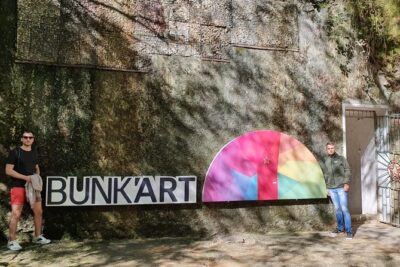
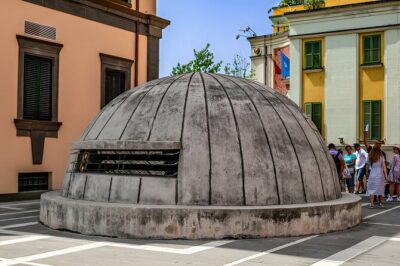
Full-Day Tour of Albania’s Bunkers and Beaches, from Tirana
Read our review →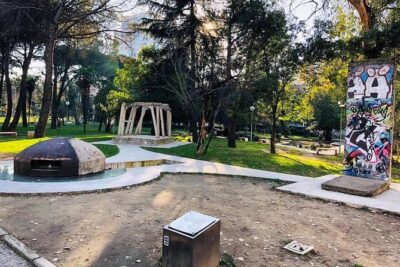
Cultural Tour in Tirana including House of Leaves
Read our review →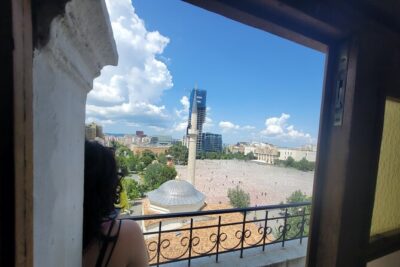
Tirana’s Communist Past: A Tasting Tour with Traditional Lunch
Read our review →Browse the lists this tour appears in