
Reviewed · WINE & RAKI TASTING
Tirana Walking Tour, Extra Virgin Olive Oil and Raki Tasting
Tirana has a clever way of telling its story: a grand central square, Ottoman traces, Italian-planned boulevards, Communist monuments, and fashionable cafés all sit within a fairly compact walk. This tour adds a distinctly Albanian finish, with extra virgin olive oil and rakis distilled from fruits such as blackberries and plums.
I like the mix of landmark sightseeing and local explanation. I also like the easy pace, which leaves room for questions, shade when possible, and practical tips about shops and restaurants. The main drawback is that the tour covers a lot in two to three hours, so some stops receive only a short explanation. One serious scheduling error has also been reported, though the operator offered a full refund and a complimentary replacement after investigating it.
Key points to know before booking
- Taste olive oil and fruit raki inside Tirana Castle, a pleasant change from a standard monument-only walk.
- Follow Tirana’s political story, from Skanderbeg and Ottoman rule to Enver Hoxha and the post-Communist Blloku district.
- Meet at Skanderbeg’s equestrian statue, then return to the same point at the end.
- Expect a certified English-speaking guide, with Taulant specifically praised for clear explanations and personal suggestions.
- Budget around two to three hours, with no meal, snacks, or additional drinks included beyond the listed tasting.
- Book with a little care, since the tour depends on good weather and requires cancellation at least 24 hours ahead for a full refund.
Why this Tirana walk is worth your morning
At $22.69 per person, this is priced as an affordable introduction to central Tirana rather than a full-day history course. You are paying mainly for a local guide who can connect places that might otherwise seem unrelated: the square’s changing statues, the city’s Ottoman remnants, Italian urban planning, Communist privilege, and today’s café culture.
That connection is the real value. You can walk past the Pyramid or Clock Tower on your own, but a guide gives you the political and social background that makes each site more meaningful. The tour also gives you a chance to ask about Albania as you go, instead of saving every question for a museum label.
The format is listed as private for your group, while the activity information also gives a maximum of 30 people. Confirm the group arrangement when you book if keeping the party small matters to you. A smaller group should make it easier to hear the guide and ask questions, while a larger one may feel more like a conventional city walk.
The walk is conducted in English and lasts about two to three hours. It is near public transportation, and most people can take part. You do not need to plan a separate meal around it, but remember that snacks, meals, and extra drinks are not included. The tasting is the included food-and-drink element.
More tasting rooms and vineyards around Tirana:
- Traditional Albanian Cooking Class in Tirana with Raki Tasting
★ 5.0 · 125 reviews - Vineyards, Albanian Wine Tasting & Boat Tour from Tirana/Durres
★ 5.0 · 64 reviews - Berat wine Tour Guided Winery Tour with Transfers and Tastings
★ 5.0 · 44 reviews
Starting beneath Skanderbeg’s statue
The meeting point is the equestrian statue of Skanderbeg in Skanderbeg Square. This is a useful place to begin because the square is both Tirana’s main civic space and a compact lesson in the country’s political changes.
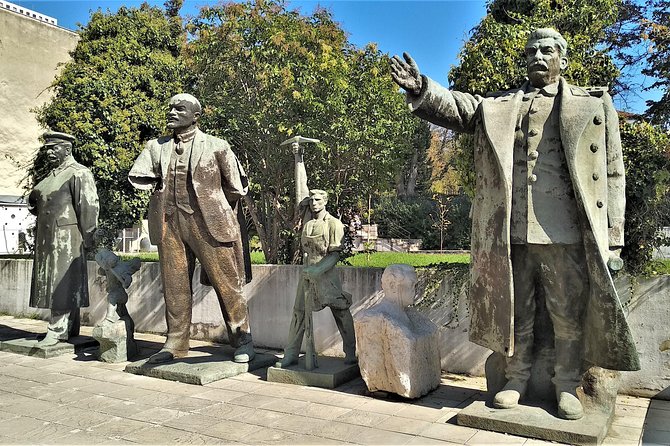
The square was conceived before the Second World War by the Italian architect Armando Brasini. Its appearance and symbolism changed several times. Statues connected with Stalin, Skanderbeg, and Enver Hoxha once occupied different places in the square, but today the Skanderbeg statue is the one that remains.
Your guide uses the square to explain how Tirana acquired its current look after repeated changes over the centuries. I find this kind of opening useful because it gives you a frame for the rest of the walk. The city is not presented as one fixed historical period. Instead, you begin to see the layers side by side.
Allow about 20 minutes here. There is no admission charge, and the stop is mainly about orientation and explanation rather than entering a building. In bright weather, the open square can feel exposed, so take water and wear a hat if needed.
The Clock Tower and Tirana’s Ottoman past
The Tirana Clock Tower is one of the city’s oldest surviving structures from the late Ottoman period. Its construction was completed in 1822, making it an important marker of Tirana before the Italian planning projects and Communist rebuilding that shaped much of the modern center.
The tower is a good reminder that Tirana was not created from scratch in the twentieth century. Its earlier town survives in fragments, and the guide helps place those fragments in context. You may not spend a long time here, but the stop adds balance to a route that also focuses on modern architecture and political history.
The description does not include a separate admission to the tower, and the listed tour stops are free. Treat this as an exterior sightseeing stop unless your guide tells you otherwise. That distinction matters if you are hoping to climb the tower or visit an interior.
Murat Toptani, a short street with a long story
The pedestrian Murat Toptani route links several important sites and gives the walk a calmer rhythm away from the traffic around the square. It is described as a historic and cultural gallery because so many different landmarks appear along it.
You pass near Tirana Castle, the Academy of Sciences, the old National Library, the former Political Persecutor’s Building, and Tanners Bridge. The route also brings you close to the National Gallery of Arts and the residence of the Albanian royal family. Not every one of these sites is a formal stop, but their presence helps your guide explain how power, culture, and public life were arranged in the city.
I like this part of the walk because it is less about checking off one famous building and more about seeing how central Tirana fits together. You are moving through a pedestrian corridor where monuments, newer businesses, and public institutions share the same space.
The route can also reveal one limitation of a compact walking tour. You may hear about more places than you have time to visit. Keep a note of anything that catches your interest, then return later if you have extra time in Tirana.
Other guided walks in Tirana:
- Walking Tour of Tirana
★ 5.0 · 646 reviews - Local food experience & walking tour of Tirana
★ 5.0 · 192 reviews - Tour a Piedi di Tirana
★ 5.0 · 174 reviews - Berat Walking Tour
★ 5.0 · 86 reviews
Tirana Castle and the tasting break
Tirana Castle, known locally as Kalaja e Tiranës, is located along Toptani Pedestrian Street. The site is presented as one of the city’s newer tourism destinations, with contemporary spaces added around the historic setting.
This is where the food-and-drink side of the experience becomes important. You taste several extra virgin olive oils and different rakis, including varieties distilled from blackberries and plums. The tasting is included, but a full meal is not, so think of it as a cultural pause rather than lunch.
Olive oil and raki tell you something about everyday Albanian food traditions in a way a monument cannot. You can compare the oils and ask about the fruit spirits while the guide explains local customs. The tasting also gives the tour a more personal feel, especially after the formal history around Skanderbeg Square.
The stop is scheduled for about 15 minutes, which is enough for a short tasting but not for a long food demonstration. If you want to buy bottles or learn about production methods, ask your guide what can be found elsewhere in the city. The experience itself does not list shopping or additional tastings as included.
Italian ideas along Tirana’s grand boulevard
The tour also explains how Italian architects shaped Tirana’s central avenues. Armando Brasini gave the main boulevard a grand European Renaissance style, while Gherardo Bosio later developed its European character with neoclassical buildings and a more practical civic design.
The account includes Mussolini’s interest in the boulevard project and his meetings with Brasini and Bosio. That detail helps you understand that the architecture was not simply decorative. It was tied to political ambition and the effort to give Tirana the look of a modern European capital.
This section is especially helpful if you enjoy buildings but do not usually read architectural histories. You can look at the proportions, façades, and broad avenues while the guide explains why they were planned that way.
Do not expect an architectural lecture with long stops at every building. The route keeps moving, and the emphasis remains on understanding the city as a whole. The benefit is variety. In one morning, you see Ottoman, Italian, Communist, and contemporary elements without spending the entire day inside museums.
Blloku, from restricted quarter to social center
Blloku, also called Ish-Blloku, is one of Tirana’s most recognizable modern districts. Today it is known for boutiques, restaurants, cafés, pubs, and bars. During the Communist period, however, it was a restricted residential area reserved for members of the political leadership.
Ordinary Albanians were not allowed to enter the district freely. The former residence of Communist leader Enver Hoxha can still be found here, giving the neighborhood a physical link to that earlier period.
The change in Blloku is one of the most useful parts of the walk. You are not only seeing a fashionable district. You are seeing how a closed political space became an entertainment center after the fall of Communism.
The stop lasts about 15 minutes. That is enough for a short walk and explanation, but not enough to explore the cafés or shops in detail. I would mark Blloku as a place to revisit after the tour, especially if you want dinner or an evening drink. The guide may also suggest places to try. One guide, Taulant, was specifically praised for sharing practical recommendations about local restaurants and shops.
The Pyramid and Albania’s difficult memory
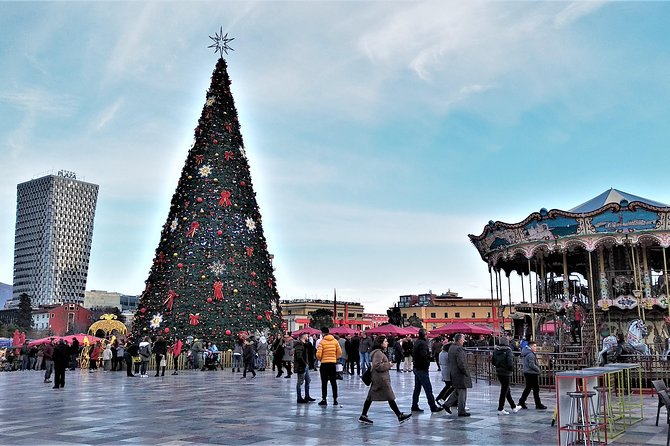
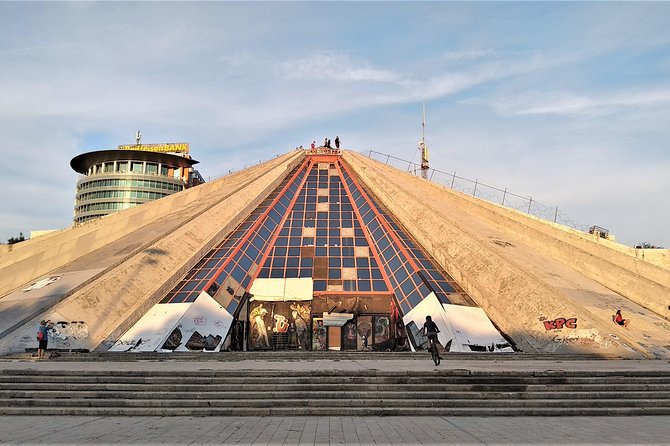
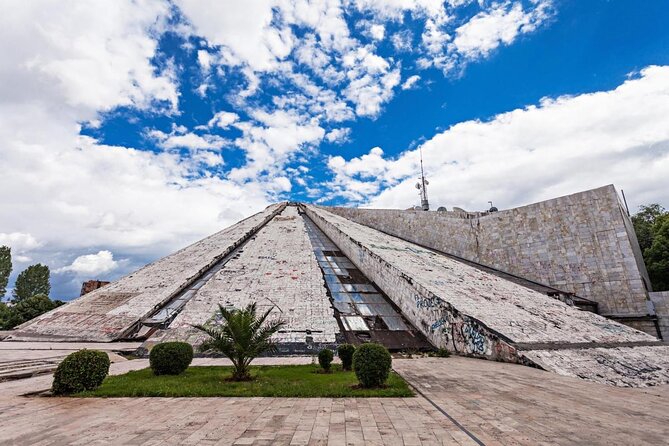
The Pyramid of Tirana, once the Enver Hoxha Museum, opened in 1988. It served as a heritage museum dedicated to Hoxha until 1991 and was designed in a pyramid form associated with ancient Egyptian monuments. Viewed from above, its shape also suggests a Communist star sending out rays.
The building is a striking example of how architecture can carry political meaning. Its original purpose was to honor Albania’s Communist leader, but its later life has been shaped by the country’s changing view of that period. The renewed structure gives the guide a chance to explain how Tirana is rethinking and reusing a difficult piece of its past.
Expect roughly 15 minutes here. The tour description says the renewed construction will surprise you, but it does not promise a separate interior visit or an extended architectural tour. Ask your guide what access is available on your date if entering the Pyramid matters to you.
I like ending near a building that raises questions rather than wrapping up with a simple photo stop. After Skanderbeg Square, the Clock Tower, the castle, and Blloku, the Pyramid brings the political story into sharp focus. It also leaves you with a useful place to revisit on your own.
Pace, group size, and what to bring
This is a walking experience, so comfortable shoes are sensible. The guide has been described as careful about keeping the group in the shade when possible, but conditions can still be warm. Bring water, sun protection, and enough room in your schedule for a relaxed walk rather than a rushed transfer between attractions.
The total time is approximately two to three hours. That range likely reflects the pace of the group and the amount of discussion at each stop. A group that asks many questions may take longer, while a brisk group may finish closer to two hours.
The meeting point and ending point are the same, at Skanderbeg Square. This makes the tour easy to fit before or after another central Tirana activity. It also means you do not need to arrange a taxi at the end.
The activity is offered in English, and a professional certified guide is included. The guide’s role is important here because most of the value comes from explanation rather than admission tickets. Taulant has been singled out by name for his clear historical information, personal perspective, and useful local suggestions, though the guide may vary by date.
Price, cancellation, and one booking caution
At $22.69 per person, the cost is fair if you want a guided orientation to central Tirana with a tasting included. Since the main sights are viewed without entrance fees, the price is not buying access to expensive attractions. It is buying the route, the context, the English-language guidance, and the olive oil and raki tasting.
The cancellation terms are straightforward but strict close to departure. Cancel at least 24 hours before the start time for a full refund. Changes made within 24 hours are not accepted, and cancellations inside that period are not refunded. Poor weather can also cancel the activity, in which case you are offered another date or a full refund.
There was one reported case in which a booking date change did not appear on the operator’s schedule, leaving the party waiting without a guide. The operator accepted responsibility, issued a full refund, and offered the same tour free if the party was still in Tirana. This appears to have been an administrative error rather than the normal arrangement, but it is sensible to check your confirmed date and meeting details before setting out.
Who should book this Tirana experience?
I would choose this walk if you have limited time in Tirana and want a clear introduction before exploring on your own. It suits first-time visitors, history-minded visitors, and anyone who likes to combine major sights with a small taste of local food and drink.
It is also a good fit if you want practical help beyond the official sights. The guide can point you toward shops, restaurants, and places worth returning to. That kind of advice can save you time during the rest of your stay.
I would be more cautious if you want long visits inside museums, a substantial meal, or a highly specialized architecture tour. The schedule is broad, with several stops receiving around 15 minutes. You see many places, but you do not study each one at length.
Final verdict: a useful first look at Tirana
Book this tour if you want Tirana explained as a city of changing powers and changing habits. The combination of Skanderbeg Square, the Clock Tower, Murat Toptani, Tirana Castle, Blloku, and the Pyramid gives you a strong first map of the center.
The olive oil and fruit raki tasting adds something you would not get from a standard city walk, while the guide’s local advice can help shape the rest of your visit. Just confirm your date, remember that the tasting is not a meal, and accept that the short format favors range over depth.
FAQ
How long does the Tirana walking tour last?
The tour lasts approximately two to three hours.
Where does the tour begin?
It begins at the equestrian statue of Skanderbeg in Skanderbeg Square, Tirana.
Where does the tour end?
The activity ends back at the meeting point in Skanderbeg Square.
Is the tour offered in English?
Yes. The tour is offered in English and includes a professional certified guide.
What food and drink are included?
The tour includes a tasting of extra virgin olive oils and different rakis, including raki distilled from fruits such as blackberries and plums.
Are meals, snacks, or additional drinks included?
No. Meals, snacks, and drinks beyond the listed olive oil and raki tasting are excluded.
Can I cancel for a full refund?
Yes, if you cancel at least 24 hours before the experience start time. Cancellations made less than 24 hours before the start time are not refunded. If poor weather causes the operator to cancel, you are offered another date or a full refund.
Just added in Tirana
- Wine Tasting day in Berat (Visit to the Berat Castle & Lunch included)★ 4.5 · 6 reviews
- From Tirana Wine Tasting & Food tour in Berat★ 5.0 · 5 reviews
- Berat Cooking Class- Traditional Albanian Cooking Class★ 5.0 · 9 reviews
- Wine Tasting & Vineyards Escape near Tirana★ 5.0 · 18 reviews
- Shen Gjergji Waterfall & Tirana Sunset Included Dinner★ 5.0 · 9 reviews
- UNESCO heritage in Albania – 4 days★ 5.0 · 3 reviews
- Private Transfers from Tirana International Airport to Sarandë★ 4.5 · 3 reviews
- Visit Vlore & Himare Beaches includes lunch★ 4.5 · 13 reviews
Wine & Raki Tasting, compared.
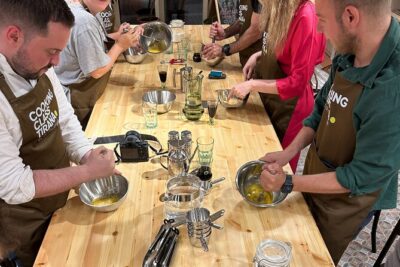
Traditional Albanian Cooking Class in Tirana with Raki Tasting
Read our review →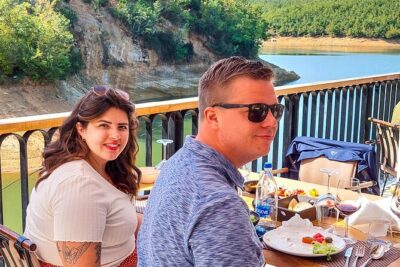
Vineyards, Albanian Wine Tasting & Boat Tour from Tirana/Durres
Read our review →
Berat wine Tour Guided Winery Tour with Transfers and Tastings
Read our review →
Paint and Wine – Authentic Art Workshop in Tirana
Read our review →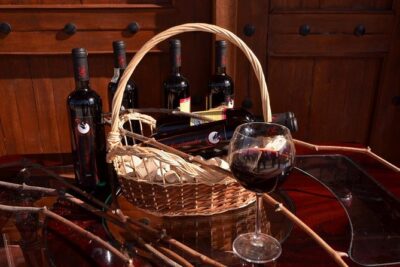
BOGOVA WATERFALL & WINERY TOUR from Berat by 1001 AA
Read our review →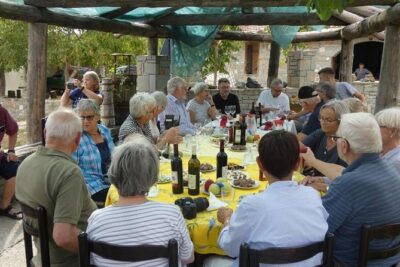
Winetasting tour in Alpeta winery – Roshnik village by 1001 Albanian Adventures
Read our review →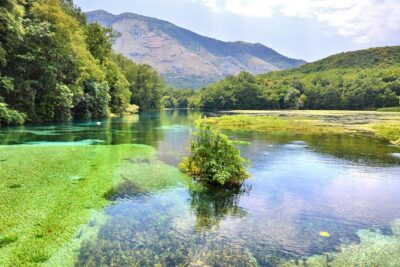
Experience Blue Eye , Lekuresi Castle and Taste Traditional Albanian Wine
Read our review →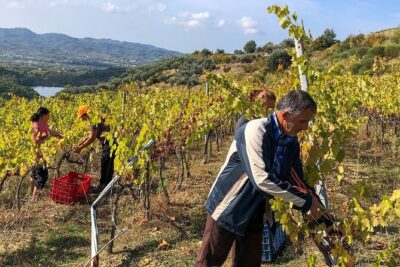
Browse the lists this tour appears in