
Reviewed · COMMUNIST HISTORY TOURS
Cultural Tour in Tirana including House of Leaves
The most striking part of this Tirana tour is the way it links public monuments with private memory. You move from Skanderbeg Square and its national symbols into the House of Leaves, where the former secret police headquarters shows how ordinary people lived under surveillance. That shift gives the city’s past a human edge.
I like the small maximum of 10 people, which should make questions and conversation easier. I also like the unusual mix of places: a 300-year-old artist’s home, an Ottoman bridge, a communist-era pyramid, and a farmers’ market all appear in the same half-day.
The main consideration is pace. The listed stops cover a lot of ground in roughly four hours, and some sites may be closed on a particular day. One guest noted that closures did not shorten the tour, but you should still expect substitutions or outdoor explanations if access changes.
Key points to know before booking
- The House of Leaves is the emotional center, with exhibits on secret police surveillance and state persecution during Albania’s communist period.
- Gjuljana may be your guide, and she is described as warm, informed, and passionate about Tirana’s story.
- Sali Shijaku’s 300-year-old villa offers a rare look at Albanian art inside a lived-in historic setting.
- The group is capped at 10 people, a useful size for a city walk with several stops.
- The route covers old, communist, and modern Tirana, from Tanners’ Bridge to the New Bazaar and FAB Gallery.
- Some sites can be closed, so the value rests partly on the guide’s ability to explain and adjust the route.
Why the House of Leaves gives this tour its focus
Many city tours begin and end with famous buildings. This one takes you into Albania’s most difficult period, making the House of Leaves the key stop.
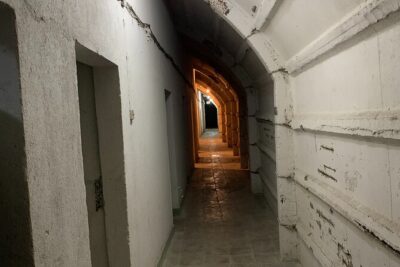
The building once served as the headquarters of the secret police. It is now a museum about surveillance, fear, and the people harmed by the communist state. You can expect the visit to add meaning to the other communist-era places on the route, especially the Pyramid of Tirana and the Postbllok memorial.
I find this kind of museum more useful after seeing a city’s grand squares and religious buildings first. You begin with national pride and public life, then see the systems that controlled private life. That contrast helps you understand why Tirana can feel open and energetic today while still carrying difficult memories.
Plan on about one hour inside the House of Leaves. That is the longest scheduled stop, and rightly so. You will want time to read the displays rather than hurry through them. The subject matter is serious, so this is not a light sightseeing stop. If you prefer only cheerful attractions, the museum may feel heavy. If you want context for modern Albania, it is likely the most useful part of the day.
A few more things to do in Tirana worth a look
- A Communist Manifesto: Tirana before and after
★ 5.0 · 50 reviews - The truest face of Communism
★ 5.0 · 18 reviews - Full-Day Tour of Albania’s Bunkers and Beaches, from Tirana
★ 5.0 · 16 reviews
Skanderbeg Square, the city’s best starting point
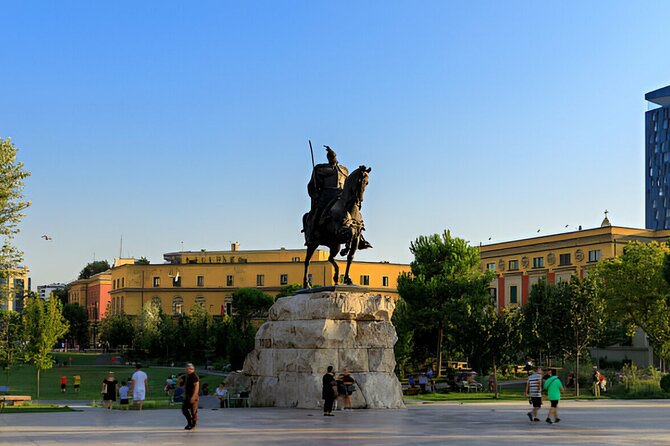
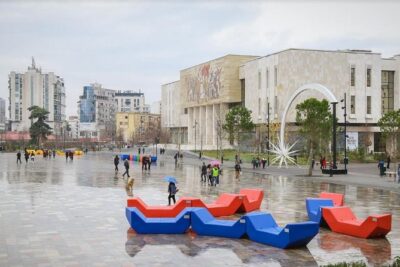
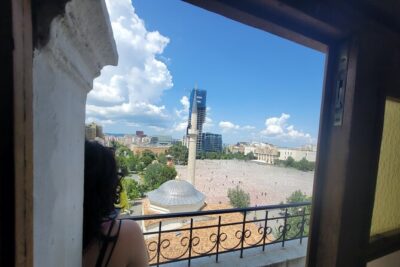
The tour begins at Skanderbeg Square, Tirana’s main public space. In the center is the statue of Gjergj Kastrioti, known as Skanderbeg, the national hero after whom the square is named.
The plaza is surrounded by neo-Renaissance buildings and major civic sights, including the Opera and Ballet Theater, the National Library, and government buildings. You have about 20 minutes here, enough to get your bearings and understand the layout before walking onward.
I like this opening because it gives you a clear introduction to Albania’s national identity. The square is not simply a place to take a statue photo. It shows how Tirana presents its past in a formal, public way.
The open space can also make this first stop feel less personal than later visits. Your guide’s explanation matters here. Ask about the buildings around the square and how the area fits into the rest of central Tirana. The tour is strongest when you treat the square as a short orientation, not the main event.
Et’hem Bey Mosque and the Clock Tower
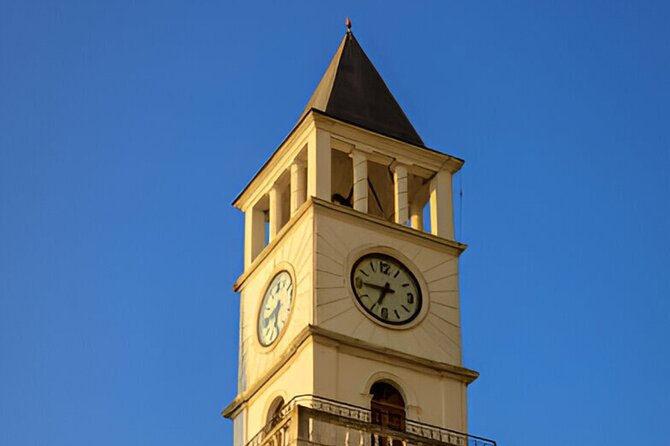
The tour overview includes a visit to Et’hem Bey Mosque, known for its detailed frescoes and its role in Albania’s move toward democracy. The nearby Tirana Clock Tower is also described as a climb for broad views over the city.
These two landmarks give you a look at Tirana’s Ottoman and religious past. The mosque offers a quiet interior and decorative detail, while the Clock Tower provides a practical view of the streets and rooftops below.
There is one point to clarify before booking: the detailed stop list does not assign separate times to the mosque and Clock Tower. The overall tour also includes many additional sites, so the actual time inside each may depend on the day’s conditions and the guide’s route.
If the tower is open and the climb is included, you should expect stairs and a view rather than a long indoor visit. If you care especially about entering the mosque or going up the tower, confirm the plan at the start. The route contains enough landmarks that the experience can remain worthwhile even if one access point changes.
Sali Shijaku’s villa and the value of a personal art space
The House of Sali Shijaku is one of the most distinctive stops. This 300-year-old traditional villa is associated with Sali Shijaku, one of Albania’s best-known painters, and functions as an art gallery as well as a historic home.
You have around 30 minutes here. That is not enough for a long art lecture, but it is enough to see the setting and take in a few memorable works. One early image is a colorful painting of two roosters facing each other, full of movement and allegory.
I like this stop because it avoids the feel of a standard institutional museum. You are seeing art in a traditional residence connected to the artist himself. The building gives the paintings a sense of place, and the short visit keeps the afternoon from becoming too museum-heavy.
The tradeoff is that 30 minutes goes quickly. You will not have unlimited time to study every work or ask about every detail. Stay close to the guide’s explanation and use the visit to understand Shijaku’s place in Albanian culture rather than expecting a full gallery tour.
Same base, a different sort of day:
- Hike Gamti Mountain with Bovilla lake view & canyon- From Tirana
★ 5.0 · 1,280 reviews - Berat city UNESCO tour, the Castle & Belshi lake- From Tirana
★ 5.0 · 804 reviews - Walking Tour of Tirana
★ 5.0 · 646 reviews - Kruja castle, the old Bazaar & Sarisalltik- Departure from Tirana
★ 5.0 · 592 reviews
The New Bazaar, where Tirana feels most current
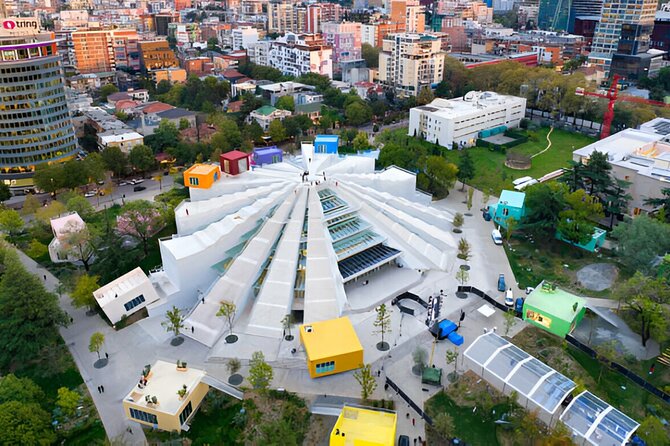
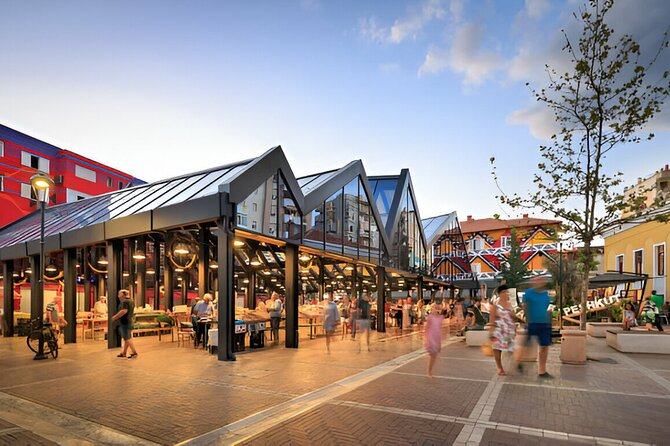
Pazari i Ri, or the New Bazaar, shifts the tour into present-day city life. This district was once an old residential neighborhood and has been renovated around a farmers’ market.
The market brings in produce, meat, seafood, spices, and other goods from surrounding areas. The scheduled visit lasts about 30 minutes, with no admission fee.
This is a good counterpoint to the museums. After learning about national heroes, state control, and historic art, you see people buying food and using a public neighborhood space. The market also gives you a chance to notice how older urban elements can remain while a district takes on a newer appearance.
Do not expect a long food tour or a dedicated tasting session. The information provided describes a walk through the market, not a meal or included sampling. If you want to buy something, carry your own spending money and ask the guide what is practical during the available time.
Tanners’ Bridge and Tirana’s Ottoman traces
Tanners’ Bridge is a small but useful stop. Built in the 1700s during Ottoman rule, the stone bridge now sits among modern streets, where its original setting is harder to imagine.
You spend about 10 minutes here. That may sound brief, and it is. The bridge is not a grand attraction requiring a long visit. Its value comes from showing how an older piece of Tirana survives within the modern city.
I appreciate stops like this because they remind you that urban history is often made of modest fragments. You do not need to spend an hour at the bridge. A short explanation can help you picture the routes and neighborhoods that existed before today’s roads and buildings.
The Great Mosque of Tirana, also called Namazgah Mosque, is listed as an additional point along the route. It is under construction and is intended to become the largest mosque in the Balkans when completed. Since the information does not give a visit time or admission detail, treat it as a point of interest rather than a guaranteed interior stop.
St. Paul’s Cathedral and Tirana’s religious mix
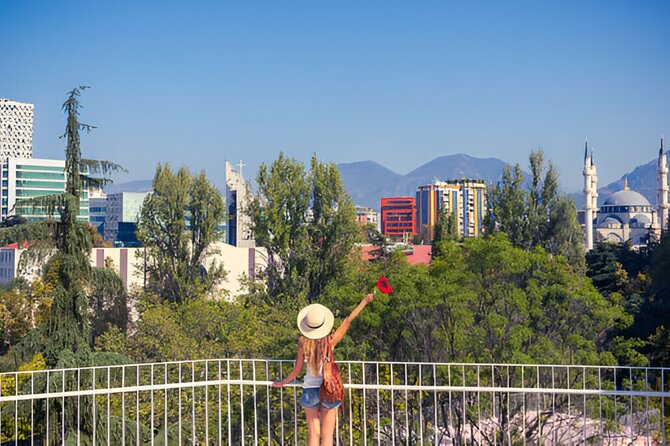
St. Paul’s Cathedral offers a different architectural and religious note. It is a relatively new building and is recognized for its distinctive design and importance to the Catholic community in Tirana and beyond.
The scheduled visit lasts about 15 minutes. That makes it a short architectural stop, not a full cathedral study. You can expect time to look at the structure, hear why it matters, and connect it with the city’s other religious landmarks.
Placed near the mosque and the historic Ottoman sites, the cathedral helps show that Tirana cannot be reduced to one faith or one period. The tour does not present the city as a single story. Instead, it moves among Ottoman, Catholic, secular, communist, and contemporary spaces.
As with any active religious building, follow the guide’s instructions about conduct and access. The supplied details do not specify a dress code or interior restrictions, so avoid assuming that every part of the cathedral will be open during the visit.
The Pyramid and Postbllok memorial

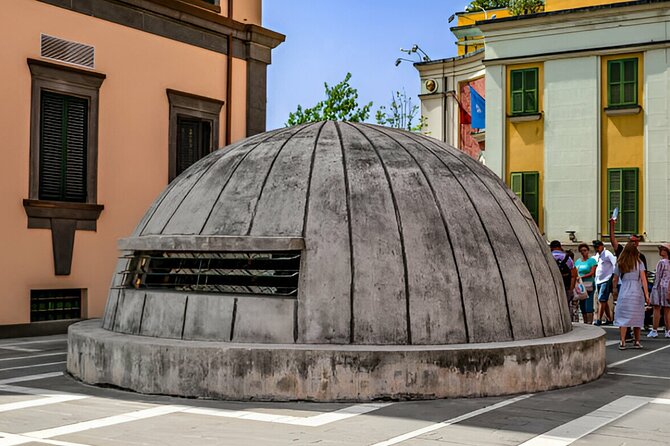
The Pyramid of Tirana is one of the city’s most unusual landmarks. It was built as a museum dedicated to communist leader Enver Hoxha shortly before communism fell. Later, it served different purposes, including use as a NATO base during the Kosovo War.
The building has been undergoing work to turn it into a youth cultural center. That means the appearance and access may change over time. You have about 15 minutes here, enough to understand the building’s political symbolism and changing role.
The Postbllok, or Checkpoint Monument, gives the communist story a more direct human focus. Its three-part memorial includes concrete girders taken from Spaç Prison, where political prisoner Lubonja was imprisoned. The girders are arranged as they were in the prison halls.
This is not a decorative monument. It asks you to think about incarceration and political repression in physical terms. The Pyramid shows how a regime represented itself. Postbllok shows what that regime could do to people.
Together with the House of Leaves, these stops create the tour’s strongest historical thread. The schedule allows about 20 minutes at Postbllok, giving the guide room to explain the memorial rather than treating it as a quick photo pause.
FAB Gallery and young Albanian artists
The FAB Gallery is part of the University of Arts in Tirana, located at Mother Teresa Square. It mainly presents students and young artists. Exhibitions may include painting, photography, or short films, and entry is usually free.
The planned visit lasts about 30 minutes. The gallery’s program changes often, so the exact exhibition will depend on the date. The available details also note colorful abstract graffiti on the walls, adding to the informal feel.
This stop works best if you enjoy seeing current art without needing a famous collection. You are not being shown a fixed national masterpiece display. You are seeing a place that supports new artists and gives you another view of Tirana’s cultural life.
The downside is unpredictability. A temporary exhibition may appeal to you, or it may not. Still, the stop gives the tour a welcome present-day finish before or alongside the New Bazaar, rather than leaving you with only monuments and political history.
What the four-hour schedule means for you
A four-hour tour with this many locations is ambitious. The scheduled visits alone include 20 minutes at Skanderbeg Square, one hour at the House of Leaves, 30 minutes at Sali Shijaku’s villa, 30 minutes at the New Bazaar, 10 minutes at Tanners’ Bridge, 15 minutes at St. Paul’s Cathedral, 15 minutes at the Pyramid, 20 minutes at Postbllok, and 30 minutes at FAB Gallery.
Because the times overlap with walking and other landmarks, the day will feel active. You will see more than you would on a slow museum-focused tour, but you will not have long at every place.
This format suits you if you want a broad first look at Tirana and prefer a guide to handle the sequence. It is less suitable if you want to linger over art, shop at the market, or read every museum panel.
The group limit of 10 helps. A small party can move more easily and gives you a better chance to ask why a building or memorial matters. The mobile ticket is convenient, and the meeting point at Skanderbeg Square is central and easy to identify.
The tour operates daily from 9:00 a.m. to 5:00 p.m. The stated price is $58.18 per person. I see reasonable value if the full route operates, since the price includes a guide, access to the House of Leaves, the art villa, and several other stops. It is less compelling if you mainly want a relaxed walk through the center, since many of the outdoor sites can be seen without an organized tour.
A guide is especially useful for the political and artistic context. Gjuljana is identified as a guide who explains places with care and enthusiasm, and she can make the difference between simply seeing a former prison memorial and understanding why it was placed there.
Free cancellation is available up to 24 hours before the start time. Changes or cancellations within 24 hours are not refunded, so keep that deadline in mind before committing.
Who should book this Tirana tour?
I would choose this tour if you have limited time in Tirana and want several layers of the city in one morning or afternoon. It is a good fit for first-time visitors who want help connecting Ottoman landmarks, religious buildings, communist sites, art, and daily life.
It also suits anyone especially interested in Albania’s communist period. The House of Leaves and Postbllok are the strongest reasons to book, while the Pyramid adds a memorable visual symbol.
Art lovers should consider it for the Sali Shijaku villa and FAB Gallery, though neither stop offers the depth of a dedicated art tour. Food-minded visitors may enjoy the New Bazaar, but this is not presented as a tasting tour.
I would hesitate if you need an unhurried pace, have trouble with a packed walking schedule, or care about seeing every interior. Some sites may be closed, and the route contains enough stops that flexibility matters.
Should you book it?
Book this tour if you want a compact, serious, and varied introduction to Tirana. The House of Leaves gives the day its purpose, while Sali Shijaku’s villa, the New Bazaar, Postbllok, and the city’s religious buildings keep the route from feeling repetitive.
The best choice is to arrive ready for a full schedule and some difficult history. Ask about the Clock Tower, mosque access, and any closures at the beginning. If you do that, the $58.18 price can be fair for a small-group experience that gives you both landmarks and context.
FAQ
Where does the tour begin?
The tour begins at Skanderbeg Square, Sheshi Skënderbej, in Tirana, Albania.
Where does the tour end?
The activity ends back at the meeting point at Skanderbeg Square.
How long does the tour last?
The tour lasts approximately four hours.
What is the maximum group size?
The tour has a maximum of 10 travelers.
Is admission to the House of Leaves included?
Yes. Admission to the House of Leaves is included.
Is the tour available every day?
The stated operating hours are Monday through Sunday, from 9:00 a.m. to 5:00 p.m., for the period from June 19, 2024, through June 18, 2026.
Can I cancel for a full refund?
Yes. You can cancel at least 24 hours before the start time for a full refund. Cancellations or changes made less than 24 hours before the start time are not refunded.
Just added in Tirana
- Wine Tasting day in Berat (Visit to the Berat Castle & Lunch included)★ 4.5 · 6 reviews
- From Tirana Wine Tasting & Food tour in Berat★ 5.0 · 5 reviews
- Berat Cooking Class- Traditional Albanian Cooking Class★ 5.0 · 9 reviews
- UNESCO heritage in Albania – 4 days★ 5.0 · 3 reviews
- Wine Tasting & Vineyards Escape near Tirana★ 5.0 · 18 reviews
- Shen Gjergji Waterfall & Tirana Sunset Included Dinner★ 5.0 · 9 reviews
- Private Transfers from Tirana International Airport to Sarandë★ 4.5 · 3 reviews
- Visit Vlore & Himare Beaches includes lunch★ 4.5 · 13 reviews
Communist History Tours, compared.
Full-Day Tour of Albania’s Bunkers and Beaches, from Tirana
Read our review →
Tirana’s Communist Past: A Tasting Tour with Traditional Lunch
Read our review →Browse the lists this tour appears in